

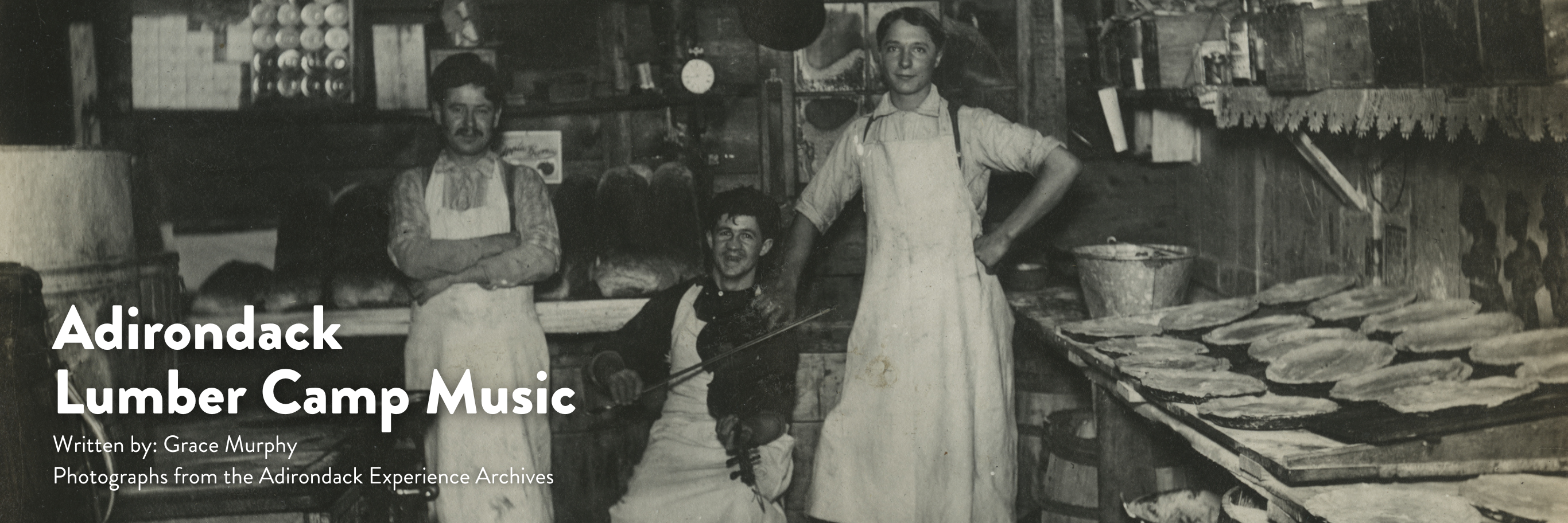
For roughly 40 years, the Adirondack Experience’s Work in the Woods exhibit has been regaling visitors of the history of logging in the region, prompting thoughtful introspection on the
many-sided issue of natural resource use and conservation with a suitably 1980s collection of products derived from wood.
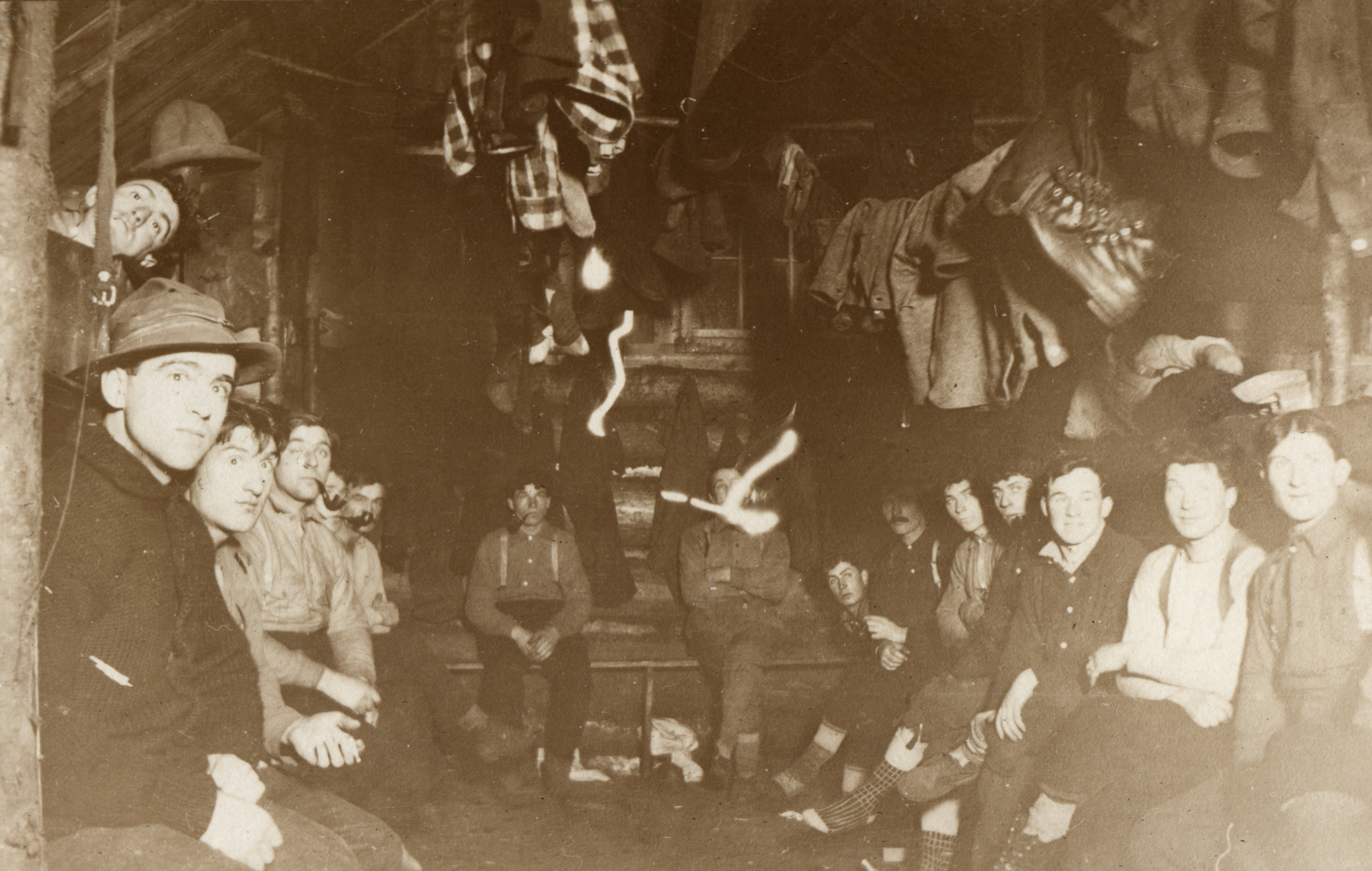
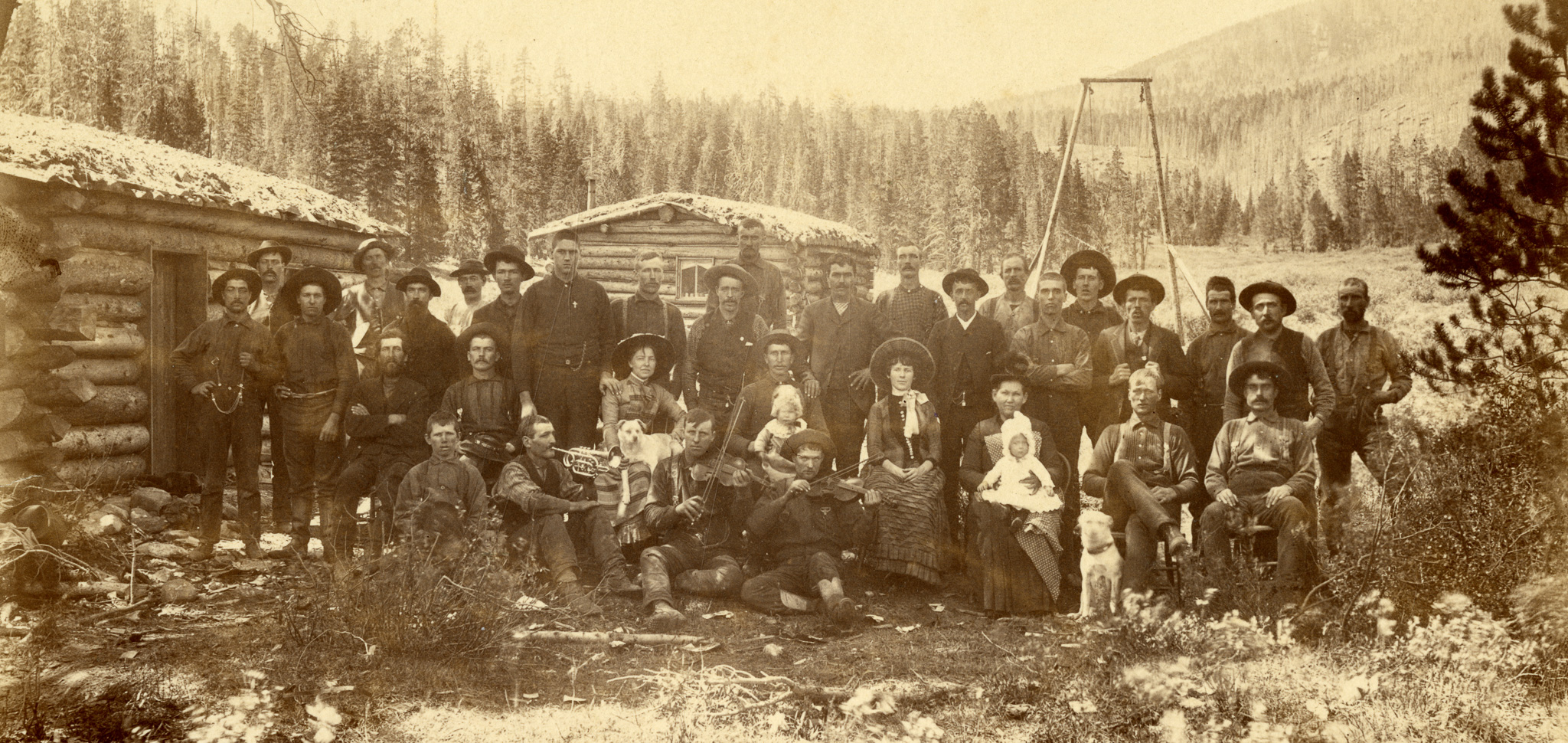
About half way through the building, one encounters the world of lumber camps, from their lively social atmospheres to the dreadful medical realities of such a life. This room proclaims the camps as a “Babel Among the Pines,” in reference to the biblical Tower of Babel where many-tongued people unified and built a city. Underneath this striking headline, one reads about the many languages and backgrounds found in Adirondack lumber camps – “…English, French-Canadian, Irish, Scotch-Irish, Italian, Scandinavian, German, Polish, Lithuanian, and Russian.”
The soundtrack which plays on loop in this room certainly speaks to this diverse setting. Funny thing about that soundtrack, however, is that the specifics of who is playing has been lost somewhere along the way. This author is of the inclination that Lawrence Older, the subject of the 1976 documentary Lawrence Older: Adirondack Minstrel, makes several appearances on this looped playlist. Either way, folks with an ear for lyrics and an affinity for folk music will find well-beloved standards and surprising new favorites included in this group.
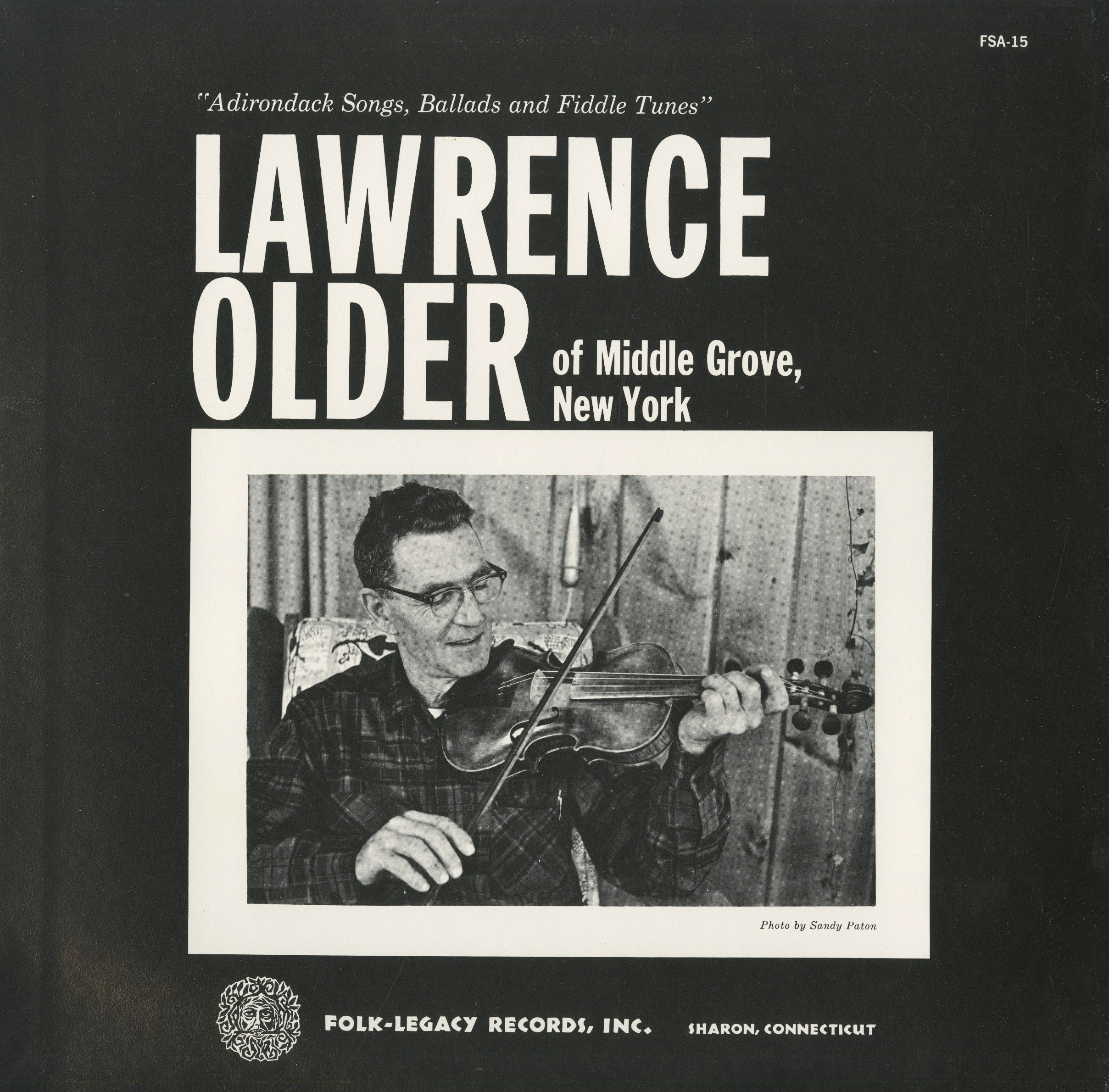
Adirondack Songs Ballads, and Fiddle Tunes. 1963.
Lawrence Older
2022.070.0002
Gypsy Davey
This is the first of six songs the author suspects is performed by Lawrence Older. In the aforementioned documentary, Pete Seeger, the boundless performer and steward of folk music, speaks to the uniqueness of Older’s version of this much loved song.
Older, unlike many other New World performers of the song, inserts lines reminiscent of the traditions of Irish lilting and English diddling in his refrains. This lyrical choice is heard in Work in the Woods. It perhaps speaks to Older’s own ancestry and the influence of the same on his music. More about these traditions will be said in the ensuing section.
This song is alternatively known as “Wraggle-Taggle Gypsy,” “Gypsum Davy,” “Black Jack Davy,” and many more. Regardless of title and specific lyrics employed by a given performer, the song at the core is Child ballad #200. The Child ballads are a collection of ballads originating from the British Isles compiled by Harvard professor Francis James Child in the 1890s. The ballad’s first appearance was in 1740 in Tea-Table Miscellany, a collection of Scots and English songs published by Allan Ramsey, an Enlightenment era artist and publisher. 1
In the succeeding centuries since its first appearance, the tune has been an enduring presence in American traditional music. No doubt lumbermen of English, Irish, and Scottish ancestry, whether by way of those countries directly or by America or Canada, were all well acquainted with song, making it a comforting and bittersweet presence; its sad lyrics giving a chance to brood on loved ones imperceptible past the thick woods.
Frog in the Spring
“Frog in the Spring,” is related to the English folk song, “Froggy Went a-Courtin’”. Its eldest known ancestor is a Scots song known as “The Frog Came to the Myl Dur” (mill door), which dates to 1549. By 1611, the matrimonial nature of tune was front center as the song and music was printed in that year under the title “The Marriage of the Frogge and the Mouse,” by English composer Thomas Ravenscroft in his book of popular and traditional songs, Melismata.
Alternatively, the song is known as “King Kong Kitchie Kitchie Ki-Me-O.” Chubby Parker, arguably the man who brought down home folk music to the National Barn Dance (the program now known as the Grand Ole Opry), cut a record using this title in 1928.4 Parker’s song enjoyed new popularity after it was included in Harry Smith’s immensely influential Anthology of American Folk Music, released by Folkways Records in 1952. This collection was a cornerstone of the mid-20th century Folk Revival in places like Greenwich Village, NYC. Smith’s headline-like summary of the song in the broadside style liner notes that accompanied the 84-song set informs the reader of “ZOOLOGIC MISCENGENCY ACHIEVED IN MOUSE FROG NUPTUALS, RELATIVES APPROVE.” A lumber camp of dog tired lumber men taking pleasure in singing the nonsense lines in between verses must have been a sight. That syllabic nonsense between verses is a practice known as diddling in English and Scottish music, not unlike lilting in traditional Irish music or scat singing in jazz, where melodic gibberish operates as part of the sum total of a tune.

 English
  French
  Spanish