

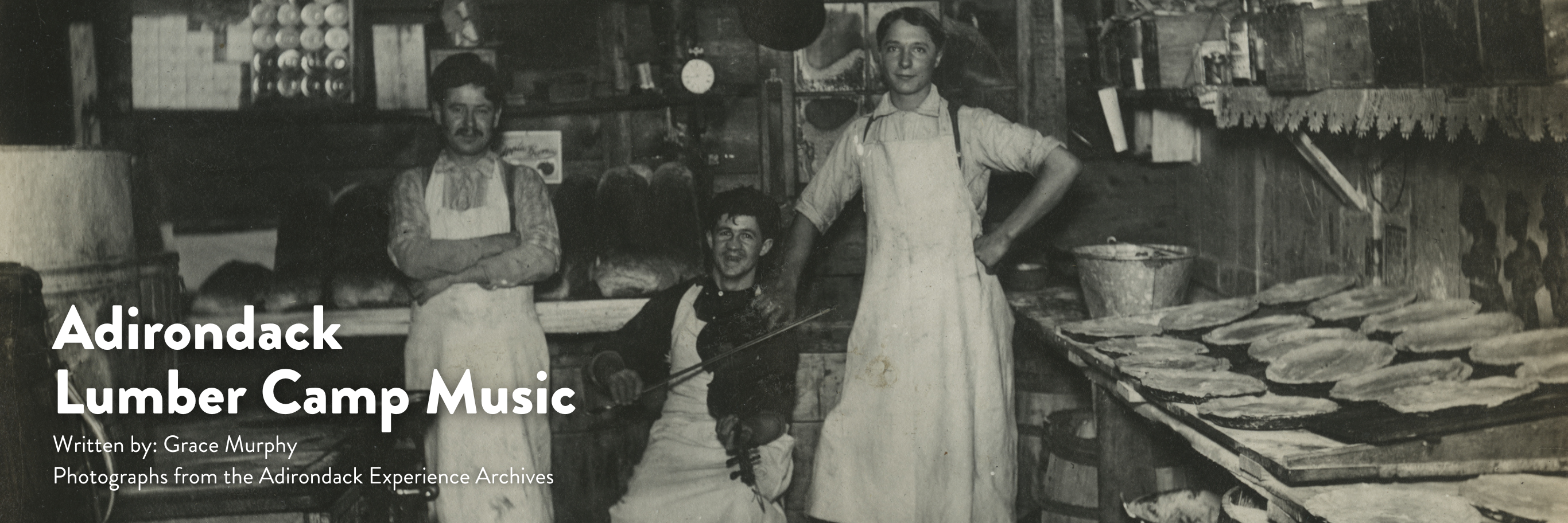
For roughly 40 years, the Adirondack Experience’s Work in the Woods exhibit has been regaling visitors of the history of logging in the region, prompting thoughtful introspection on the
many-sided issue of natural resource use and conservation with a suitably 1980s collection of products derived from wood.
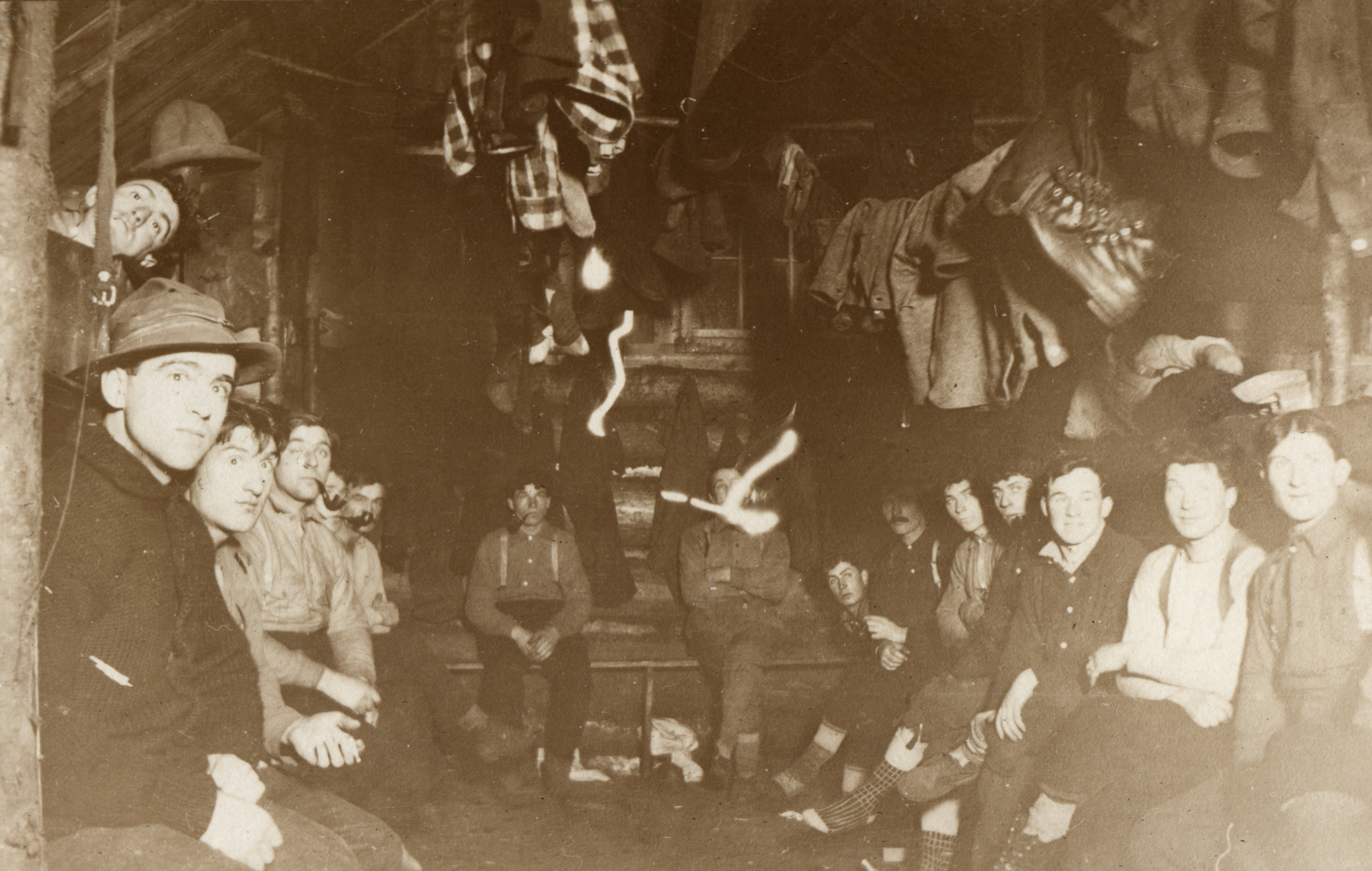
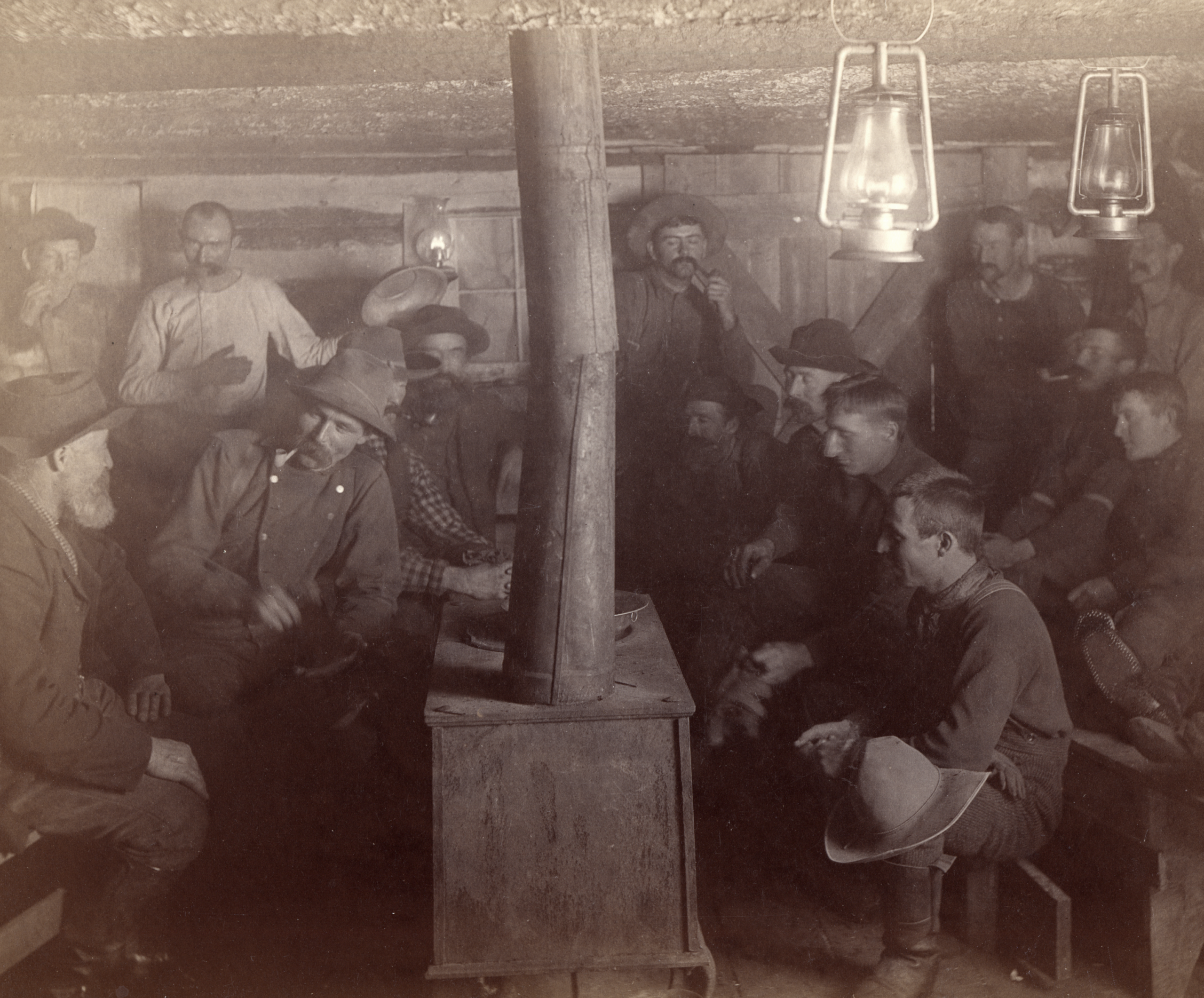
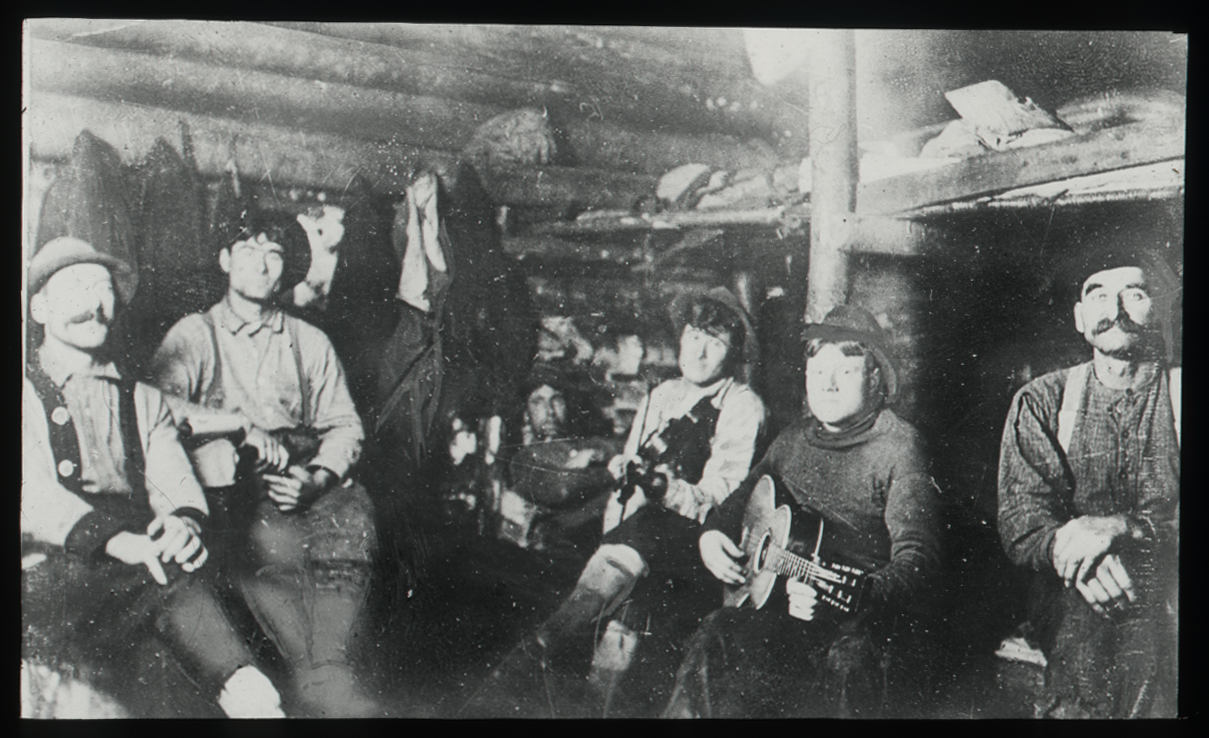
About half way through the building, one encounters the world of lumber camps, from their lively social atmospheres to the dreadful medical realities of such a life. This room proclaims the camps as a “Babel Among the Pines,” in reference to the biblical Tower of Babel where many-tongued people unified and built a city. Underneath this striking headline, one reads about the many languages and backgrounds found in Adirondack lumber camps – “…English, French-Canadian, Irish, Scotch-Irish, Italian, Scandinavian, German, Polish, Lithuanian, and Russian.”
The soundtrack which plays on loop in this room certainly speaks to this diverse setting. Funny thing about that soundtrack, however, is that the specifics of who is playing has been lost somewhere along the way. This author is of the inclination that Lawrence Older, the subject of the 1976 documentary Lawrence Older: Adirondack Minstrel, makes several appearances on this looped playlist. Either way, folks with an ear for lyrics and an affinity for folk music will find well-beloved standards and surprising new favorites included in this group.
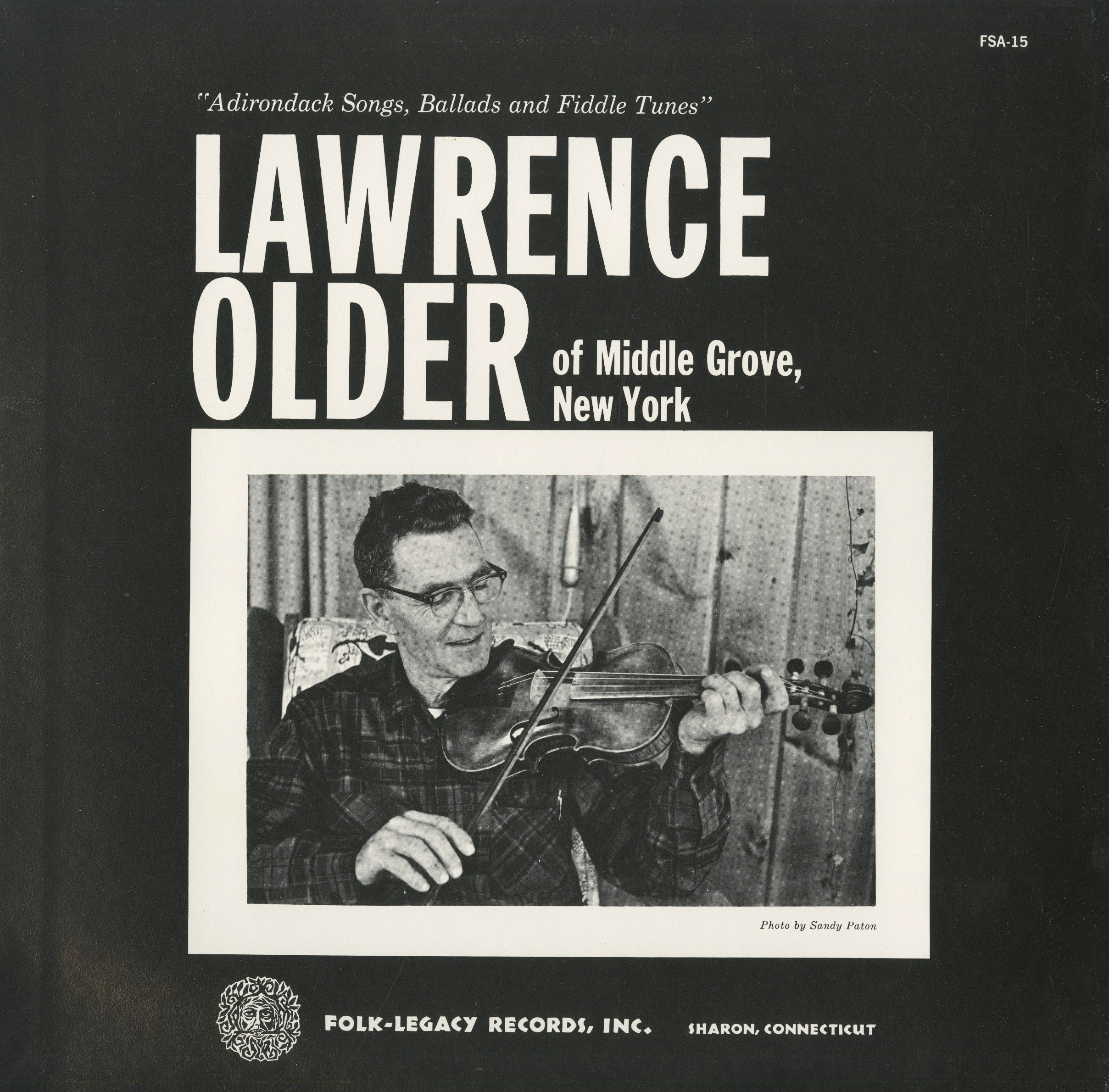
Adirondack Songs Ballads, and Fiddle Tunes. 1963.
Lawrence Older
2022.070.0002
Gypsy Davey
This is the first of six songs the author suspects is performed by Lawrence Older. In the aforementioned documentary, Pete Seeger, the boundless performer and steward of folk music, speaks to the uniqueness of Older’s version of this much loved song.
Older, unlike many other New World performers of the song, inserts lines reminiscent of the traditions of Irish lilting and English diddling in his refrains. This lyrical choice is heard in Work in the Woods. It perhaps speaks to Older’s own ancestry and the influence of the same on his music. More about these traditions will be said in the ensuing section.
This song is alternatively known as “Wraggle-Taggle Gypsy,” “Gypsum Davy,” “Black Jack Davy,” and many more. Regardless of title and specific lyrics employed by a given performer, the song at the core is Child ballad #200. The Child ballads are a collection of ballads originating from the British Isles compiled by Harvard professor Francis James Child in the 1890s. The ballad’s first appearance was in 1740 in Tea-Table Miscellany, a collection of Scots and English songs published by Allan Ramsey, an Enlightenment era artist and publisher. 1
In the succeeding centuries since its first appearance, the tune has been an enduring presence in American traditional music. No doubt lumbermen of English, Irish, and Scottish ancestry, whether by way of those countries directly or by America or Canada, were all well acquainted with song, making it a comforting and bittersweet presence; its sad lyrics giving a chance to brood on loved ones imperceptible past the thick woods.
Frog in the Spring
“Frog in the Spring,” is related to the English folk song, “Froggy Went a-Courtin’”. Its eldest known ancestor is a Scots song known as “The Frog Came to the Myl Dur” (mill door), which dates to 1549. By 1611, the matrimonial nature of tune was front center as the song and music was printed in that year under the title “The Marriage of the Frogge and the Mouse,” by English composer Thomas Ravenscroft in his book of popular and traditional songs, Melismata.
Alternatively, the song is known as “King Kong Kitchie Kitchie Ki-Me-O.” Chubby Parker, arguably the man who brought down home folk music to the National Barn Dance (the program now known as the Grand Ole Opry), cut a record using this title in 1928.4 Parker’s song enjoyed new popularity after it was included in Harry Smith’s immensely influential Anthology of American Folk Music, released by Folkways Records in 1952. This collection was a cornerstone of the mid-20th century Folk Revival in places like Greenwich Village, NYC. Smith’s headline-like summary of the song in the broadside style liner notes that accompanied the 84-song set informs the reader of “ZOOLOGIC MISCENGENCY ACHIEVED IN MOUSE FROG NUPTUALS, RELATIVES APPROVE.” A lumber camp of dog tired lumber men taking pleasure in singing the nonsense lines in between verses must have been a sight. That syllabic nonsense between verses is a practice known as diddling in English and Scottish music, not unlike lilting in traditional Irish music or scat singing in jazz, where melodic gibberish operates as part of the sum total of a tune.
En Roulant
This song came to Canada originally with the French settlers and tells the story of a prince who either tragically or carelessly shoots a neighbor’s white duck. This aspect of the song is perhaps more pronounced when one encounters its alternative title, “Les Trois Beaux Canards.” Its roots lay in medieval France of the 14th and 15th centuries before arriving in the New World in the 1600s thanks to the voyageurs. Voyageurs were engaged in the opening of the Northwestern United States in pursuit of beaver pelts, their 3,000 mile canoe route between the Great Lakes and the interior of Canada is today partially stewarded by Voyageurs National Park in northern Minnesota.
For these western fur traders and Adirondack lumbermen, this paddling song was surely sung to lighten and synchronize the work of canoeing and guideboat rowing alike. The simplicity of the song, only having a few short verses largely made up of its steady and cadenced refrain, makes clear its usefulness as a work song intended to coordinate rowers’ paddles. The refrain, “En roulant ma boule, en roulant me boule,” translates to “Roll the ball, oh roll it along.”
Pat Malone
The Clancy Brothers once said the Irish are known for happy war songs and sad love songs. “Pat Malone,” falls in line with that tradition, joining other Irish songs such as “Isn’t Grand Boys” and “Finnegan’s Wake” in making light of the main character’s/narrator’s death. In fact this song, also known as “The Irish Wake,” seems to be related to the latter, an Irish street ballad that inspired the title of James Joyce’s 1924 novel, Finnegans Wake. “Pat Malone” was included in a late 1890s publication called Hamlin’s Wizard Oil New Book of Song, printed in Chicago. Hamlin’s Wizard Oil belongs to that pantheon of cure-alls hocked in the 19th and 20th centuries with the help of popular and entertaining songs and performers.
This selection demonstrates the variety of sources lumbermen looked to for their material, a spectrum that included traditional songs like those already discussed as well as commercial pieces harvested from music halls, Tin Pan Alley, and, yes, medicine shows. Though this song opens with the line, “Times were hard in Irish town,” there is no indication that it has anything to do with Minerva’s Irishtown hamlet.
Old Shoes and Leggings
This jaunty tune is also known as “Old Grey Beard Shaven” and “The Old Man’s Courtship.” It is a derivative of a crop of songs from Scotland, England, and Ireland that are known by several names such as “An Old Man Came O’er the Lea” and “His Old Grey Beard Kept Waggin’,” but adheres to the American tendency to emphasize the man’s choice of footwear.
These old world ancestors seem to date to the first half of the 18th century at least. It is unclear just why American versions of the song focus on the old man’s footwear in comparison to other versions, but one could argue that it highlights the theme of the song in way meaningful to American audiences living in especially rural and wild environs.
What is the theme? Why, the theme is simply premised on how awkward and unrefined the old man is towards his potential suitors and their mother. He does not even shed his overshoes and leggings upon entering the family’s home—garments he wears to protect his legs from muck and brush as he walks to go a-courting. One can imagine lumbermen holed up in their lumber camps for months at a time with their caulked boots and high-water hemmed pants reveling in the jocularity of this song and its lyrics.
Ballad of Blue Mountain Lake
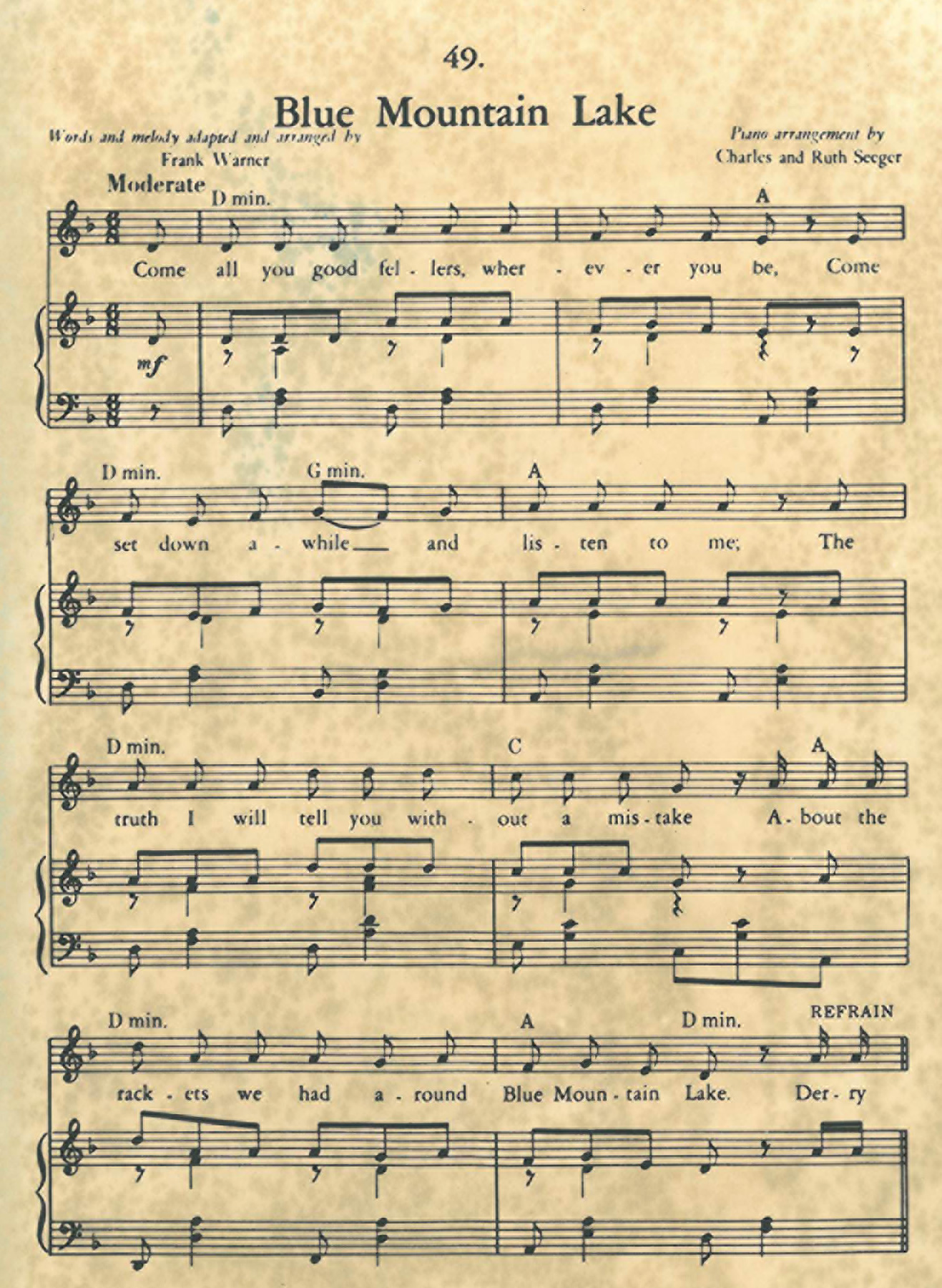
This song, also known as “The Rackets Around Blue Mountain Lake,” “The Ruckus Around Blue Mountain Lake,” and “The Belle of Long Lake,” illustrates an important aspect of lumber camp’s musical scene that all other songs discussed thus far fail to demonstrate. This aspect is just how personal the songs could be as men composed lyrics that were especially meaningful to themselves and their camp and its locale. “Ballad of Blue Mountain Lake” appears to borrow its melody and refrain (“Derry down, down, down, derry, down”) from the English ballad, “The Three Ravens,” which incidentally was originally published in Thomas Ravencroft’s Melismata (1611), the same as the ancestor of “The Frog in the Spring”.
This format pulls many duties, serving as the basis for other laboring songs such as “The Dreadnought” and “Red Iron Ore.” According the Adirondack Experience’s founder, Harold K. Hochschild, “Ballad of Blue Mountain Lake” likely dates to the 1870s, with the most “authentic” version having been recorded by nonfiction author Carl Carmer in his book, The Hudson River (1939). Carmer recorded the version of the ballad performed by Yankee John Galusha, a dyed in the wool Adirondacker, who stated the events of the song occurred on Blue Mountain Lake near Towahloodah (Blue Mountain’s native name) and Eagle’s Nest following logging operations 10 miles east of Blue Mountain Lake on the Pisgah Mountains.
In the lyrics live a veritable cast of local characters. There are the Sullivan brothers, Will and Shang (Dennis) who were members of William W. Durant’s steamboat crews in the 1880s; Jimmy Lou, a woodsman from Minvera remembered for his grit and remembered only by that name; Dandy Pat, a nickname for Patrick Moynehan, a young lumberman in the song, but eventually a respected entrepreneur with endeavors in steamboating, railroading, and private forest management; George Griffin, supposedly a lumber boss who worked for Jones Ordway, a hotelier turned powerful lumber company president by 1873, and others; Bill Mitchell, an infamous Blue Mountain Lake resident; and of course, Nellie, the belle of Long Lake, whose full name was Ella Plumley who lived the rest of her days in the village after a sojourn to Wyoming with her husband, Walter Hammer.
It has been posited that the lumber company at the center of all of this ruckus was the Griffin Company located in Glens Falls. As is often the case with folk songs, differences in these lyrics often appear from version to version. A Long Lake logger once named the boss as Griffith while a Glens Falls singer named the boss as Mitchell.

 English
  French
  Spanish