
Adirondack Moments
A Collaboration with Albany Public Library
This dynamic virtual series featured conversations with authors, historians, and cultural leaders who illuminated the stories and ideas that define the Adirondacks and beyond. From the legacy of Great Camps to the influence of iconic artists and writers, each session offered fresh perspectives on the region’s rich heritage and its connections to broader cultural movements.
Adirondack Moments was held on Wednesday evenings from January through April 2026. Browse the archive below to explore these past programs.
You may also be interested in our previous zoom series
Presented in partnership with:
Previous Programs
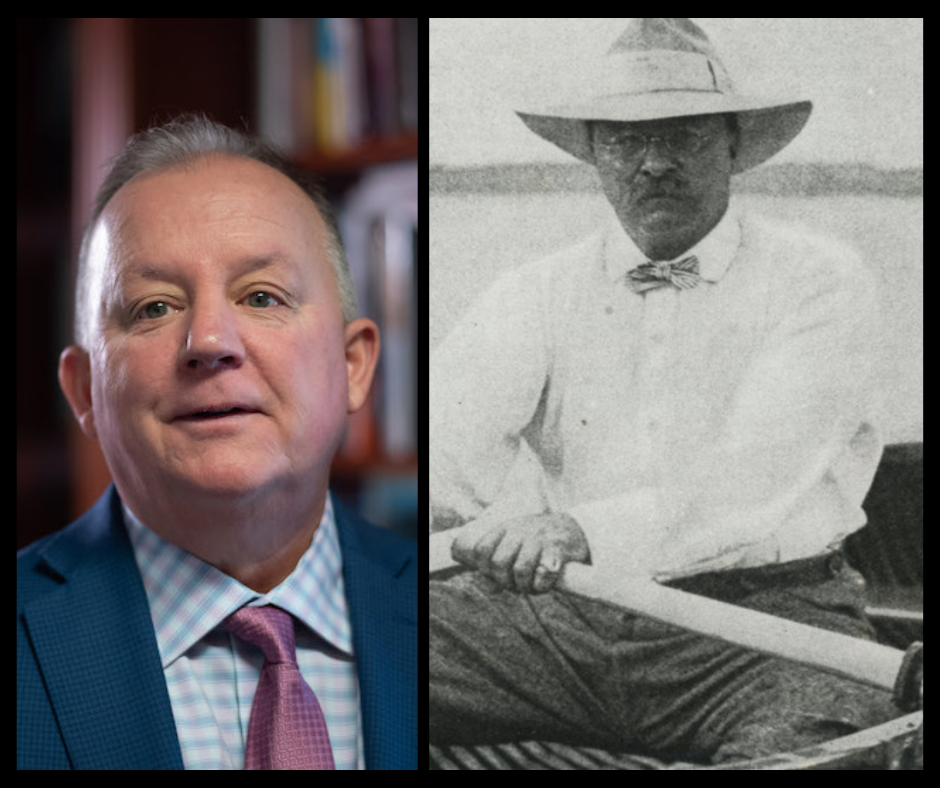
Theodore Roosevelt’s Audacious Midnight Ride to the Presidency
April 8, 2026
Teddy Roosevelt biographer Paul Grondahl will discuss the dramatic hours when Roosevelt climbed Mount Marcy, learned that President William McKinley had died of an assassin’s wounds, a daring midnight wagon ride to the North Creek train station, and his swearing-in as the 26th President of the United States in Buffalo on September 14, 1901. Grondahl’s talk will clarify one lingering mystery about Roosevelt’s long delay at the Tahawus Club before he set out for North Creek.
About The Speaker:
Paul Grondahl is the Opalka Endowed Director of the New York State Writers Institute at the University at Albany, one of the nation’s pre-eminent literary presenting organizations. He is an award-winning journalist who worked as a reporter for 33 years at the Albany Times Union, where he still contributes a weekly column. He was named director of the Writers Institute in 2017 and is also a distinguished alumnus in arts and letters at UAlbany, where he earned a master’s degree in English. He is the author of several books, including political biographies of Albany Mayor Erastus Corning 2nd and Theodore Roosevelt, titled I Rose Like a Rocket: The Political Education of Theodore Roosevelt. His forthcoming biography, Andy Rooney: A Lucky Life, will be published by SUNY Press in the fall of 2026.

Georgia O’Keeffe at Lake George: Painted Subjects, Social Relations, and Reflections on Selfhood
March 18, 2026
How might we account for the creative outpouring that marked Georgia O’Keeffe’s years at Lake George, an interval that stands among the most prolific of her seven-decade career? A survey of her work from this period reveals an astonishing abundance: roughly two hundred paintings on canvas and paper, accompanied by numerous sketches and pastels.
Lake George functioned for O’Keeffe as a potent site of artistic stimulus. Many of the botanical subjects that would come to define her oeuvre first took shape in this site. As a retreat from New York City, it afforded not only sustained contact with the natural world but a deep sense of place, an anchoring essential to her developing modernist vision. Yet it was not solely a refuge; Lake George also operated as a social nexus, animated by a continuous circulation of visitors.
Within this multifaceted setting, O’Keeffe pursued new subjects while reckoning more deliberately with thoughts of selfhood and artistic independence, including the imagined prospect of a studio of her own. This presentation examines the forces that shaped her Lake George years: her evolving subjects, the shifting social dynamics around her, and the ways in which the site itself nourished her creative practice.
About The Speaker:
Yaritza Martinez Pule joined the Georgia O’Keeffe Museum in 2022 as Curatorial Assistant after completing a Fulbright research grant. Previously, she was a curatorial research fellow at Museo Franz Mayer in Mexico City and a curatorial assistant at 80WSE Gallery, a gallery affiliated with New York University where she co-curated and organized exhibitions with the Institute of Fine Arts, the Costume Institute, and Steinhardt’s Department of Art. In addition, she was a visiting scholar in the archives at Benemérita Universidad Autónoma de Puebla. She holds an MA from New York University where she concentrated her research on the historical and cultural dimensions of textiles, and a BA from Marquette University with a focus on Art History, Digital Media Studies, and Spanish and Latin American Studies, completing a part of her art history education from King’s College London. Most recently, Yaritza curated A Circle that Nothing Can Break, an exhibition examining the ways in which Georgia O’Keeffe’s unique vocabulary of round forms intersected with feeling, memory, and lived experience.
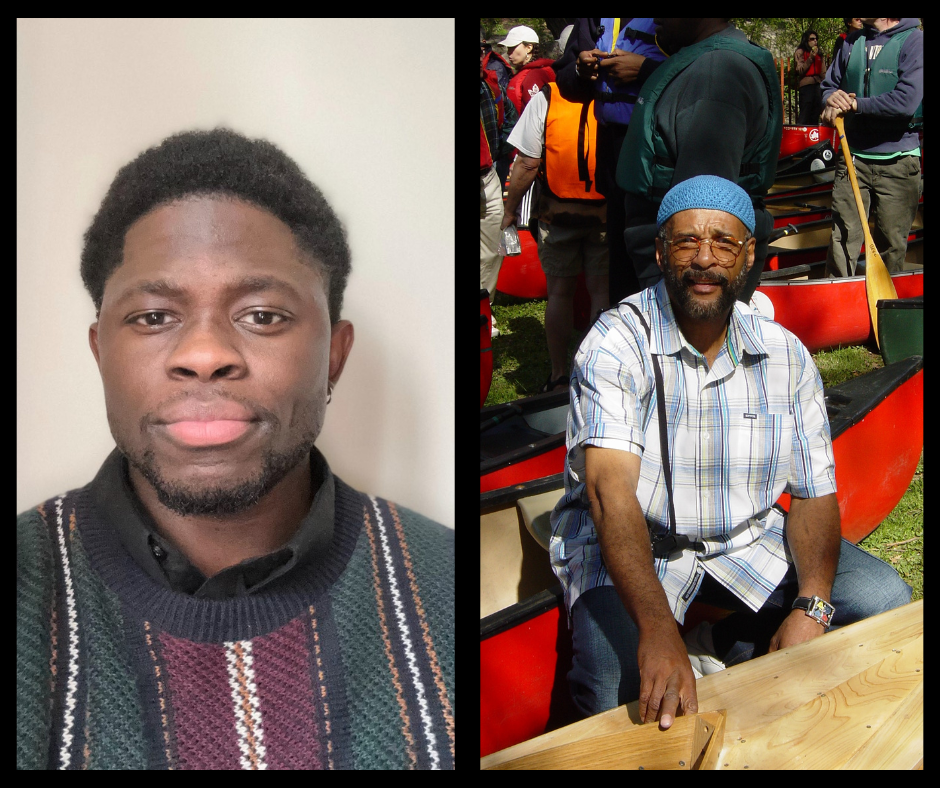
Edventures with Brother Yusuf
February 17, 2026
In preparation for a landmark exhibition on the Black Experience in the Adirondacks, Albany Public Library and the Adirondack Experience will host speaker Adam Stewart at the Albany Public Library, also offered as a live-stream Zoom. Adam will offer reflections on the time he spent as a kid in the Adirondacks with Brother Yusuf Burgess. With Project Curator Charles Clark III, we invite the public to join us before the program to share their photos or items that connect them to the Adirondacks.
About The Speaker:
Adam Stewart is an educator, youth mentor, and outdoorsman whose work bridges classroom learning, community engagement, and environmental stewardship. Adam lived in Albany until 2020, during which he served in several youth and community-focused roles. He worked for the New York State Department of Environmental Conservation as an Assistant Director for DeBruce and later as a Coordinator for NYSDEC’s Campership diversity Program. He also supported youth at Equinox House and taught science and math at The Doane Stuart School. In 2020, Adam relocated to Syracuse, where he earned his master’s degree in Special Education from NYU. He now teaches in a 4th-grade co-teaching classroom, specializing in inclusive education. Since 2015, Adam has served as a board member for John Brown Lives!, a human-rights and environmental-justice organization committed to storytelling, outdoor education, and community liberation. His passion for the outdoors informs both his professional work and personal life, as he is a hiker, camper, and advocate for connecting youth—especially those from underserved communities—to nature.
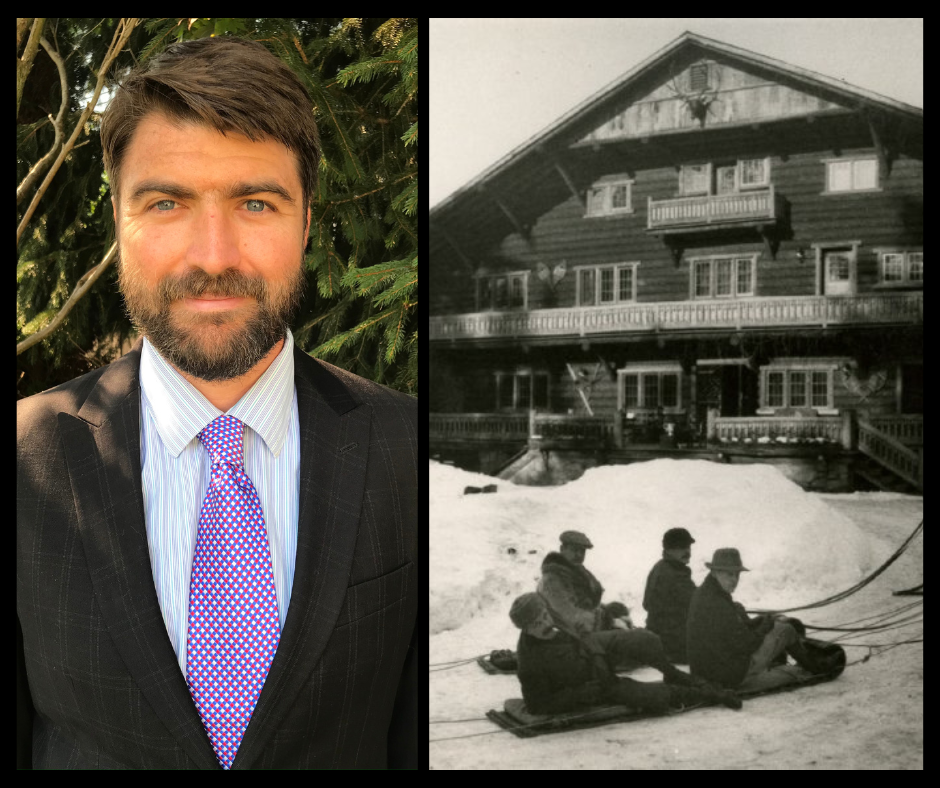
Greetings from the Great Camps: The History of the Adirondack Vacation
January 14, 2026
In 1850 the Adirondack region remained, literally, a blank spot on the map—unsurveyed, uncharted, and largely unorganized. Most white Americans saw the Adirondacks as a place so desolate that—to quote an early document, “by reason of Mountains, Swampes (sic), and Drowned Lands is impassible and uninhabited.”
Yet by 1900 the Adirondacks hosted elaborate summer estates for the wealthiest families in America—including Vanderbilts, Rockefellers, Carnegies, Whitneys, and Morgans. Theodore Roosevelt actually inherited the Presidency while on a midnight buckboard ride through the heart of the park. For more than a century since, the Adirondacks have remained a famous destination drawing magnates, celebrities, and everyday Americans. Hikers, hunters, canoe campers, power oaters, elites, and environmentalists (and many combinations thereof) who all look forward to their visits and vacations in “the ADK.”
How did this transition occur? Why did it occur? What forces led to the development of the region during the late 19th Century, and how does Adirondack history interact with American history more broadly? And just what was a “Great Camp,” anyway?
Join American Historian and Year-Round Adirondacker Connor Williams for “Greetings from the Great Camps: The History of the Adirondack Vacation.” Williams, who serves as Lead Historian at Great Camp Sagamore and teaches at Middlebury College, will discuss the forces, movements, moments and people that led to the nexus of wilderness, exertion, rejuvenation, and comfort that still all define the Adirondack region today.
About The Speaker:
Connor Williams is a scholar, teacher, and advocate of American and African American history, Connor Williams shares the stories of our past to help shape the societies of our future. A native New Yorker and aspiring maritime mountaineer, Connor currently lives with his family along Lake Champlain in the Adirondack Park. He serves as the Historian for Great Camp Sagamore, a National Historic Landmark and former Vanderbilt estate, where he directs all history programming for several thousand visitors each summer.
Most broadly, and via a variety of formats, Connor uses this role to conceive and execute innovative ways to teach environmental history, Gilded Age history, and the history of class, capitalism, and inequality to diverse public history audiences. Prior to his Ph.D at Yale, Connor earned a M.A. at Dartmouth College, where his thesis examined diasporic influences upon Frederick Douglass’ political thinking. Among other fellowships, awards, and prizes, he was the finalist for the nationwide Louis Pelzer Memorial Award for the best Graduate Student writing. Connor has taught at Yale, Southern Connecticut State University and the Yale College Writing Center. He has also worked for Yale’s Manuscripts and Archives division and the Gilder Lehrman Center for the Study of Slavery, Resistance, and Abolition.
 English
  French
  Spanish