
Bug Off: Duflo, Dope, and the Adirondack Fight to Control Pest Control
By: Rachel Ameen
Every spring, the Adirondacks come alive. Loons nest on quiet lakes and brook trout jump in the cold streams as the forest grows lush after months of bare branches. But alongside these welcome arrivals comes another: the black fly. These tiny insects rule the North Country from mid-May through early July, driving tourists back to their cars and leaving locals with swollen ears and bloodied necks. A 1931 state survey found that businessmen blame the flies for “discounting” the park’s value by 40 to 50 percent each season.[i]
Enter Jeffrey Duflo. From his base in the Hudson Valley, Duflo built a small empire on the Adirondack fly problem. His family’s company, Duflo Spray Chemical, entered the aerial application business in 1955, and by the 1970s, specialized in insect suppression across the region. Each spring, Duflo flew his twin-engine plane over the park, blanketing the landscape with pesticides at the behest of local townships. For decades, his aerial campaigns were many municipalities’ primary defense against black flies.
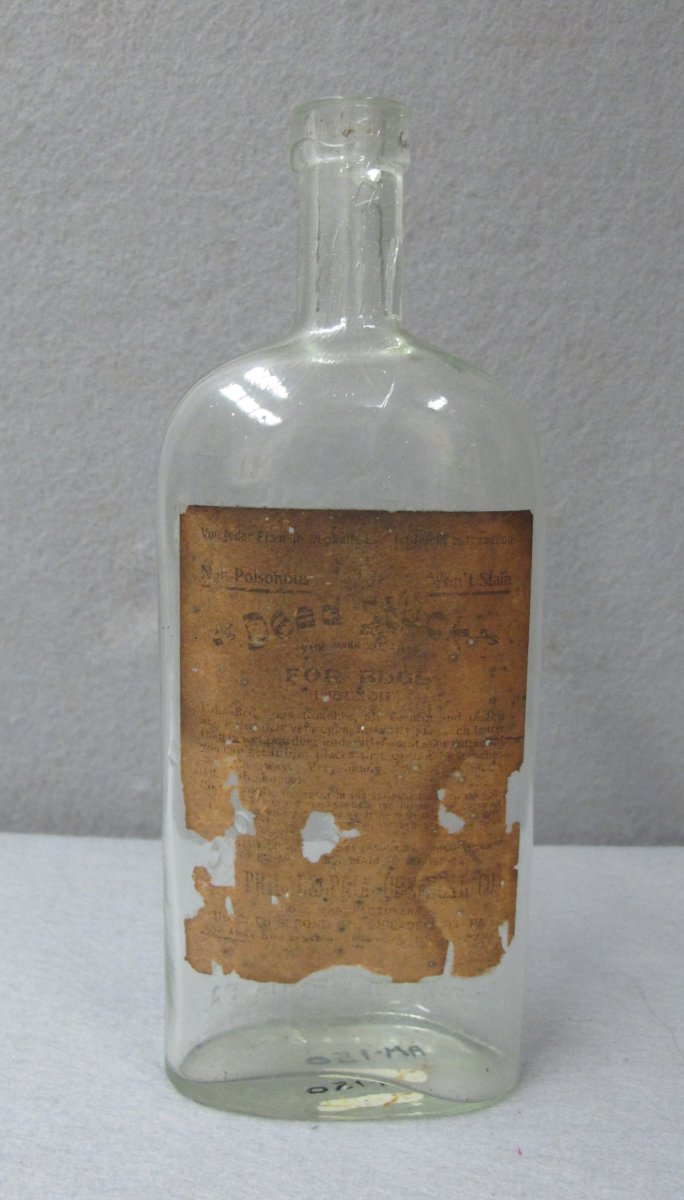
The battle against black flies didn’t begin with Duflo. Long before aerial spraying, Adirondackers waged war with whatever they had on hand: smudge fires, head nets, and pungent “dopes” made from pine tar, skunk oil, and pennyroyal.[ii] Early tourists complained about the stench and debated the effectiveness of such methods, but agreed that the flies, unabetted, were untenable.
After World War II, chemistry promised a fix. DDT arrived first, then methoxychlor, then Dibrom-14—each an escalation of the war against insects. Duflo’s planes became a familiar sight each spring, contracted by townships to spray chemicals over forests, wetlands, and backyards. For communities desperate to salvage their summer tourism, it seemed like progress.
But the spraying never went uncontested. Beekeepers reported dead hives. Locals told stories of rashes and sickness after planes passed overhead. In 1962, Rachel Carson’s Silent Spring gave a name to the unease many already felt. A decade later, the Adirondack Daily Enterprise ran a headline that captured the region’s growing concern: “Spray Now, Pay Later?”[iii] And in the 1970s, a new scientific discovery would threaten Duflo’s spraying empire.
Daniel Molloy wasn’t trying to save the black fly. He was trying to kill it more carefully. A researcher at the New York State Museum’s Biological Survey, Molloy partnered with entomologist Hugo Jamnback in the mid-1970s to find a larvicide that wouldn’t poison everything else in the process. Working out of a lab in Cambridge, New York, the team tested one biological agent after another, to minimal success.[iv]
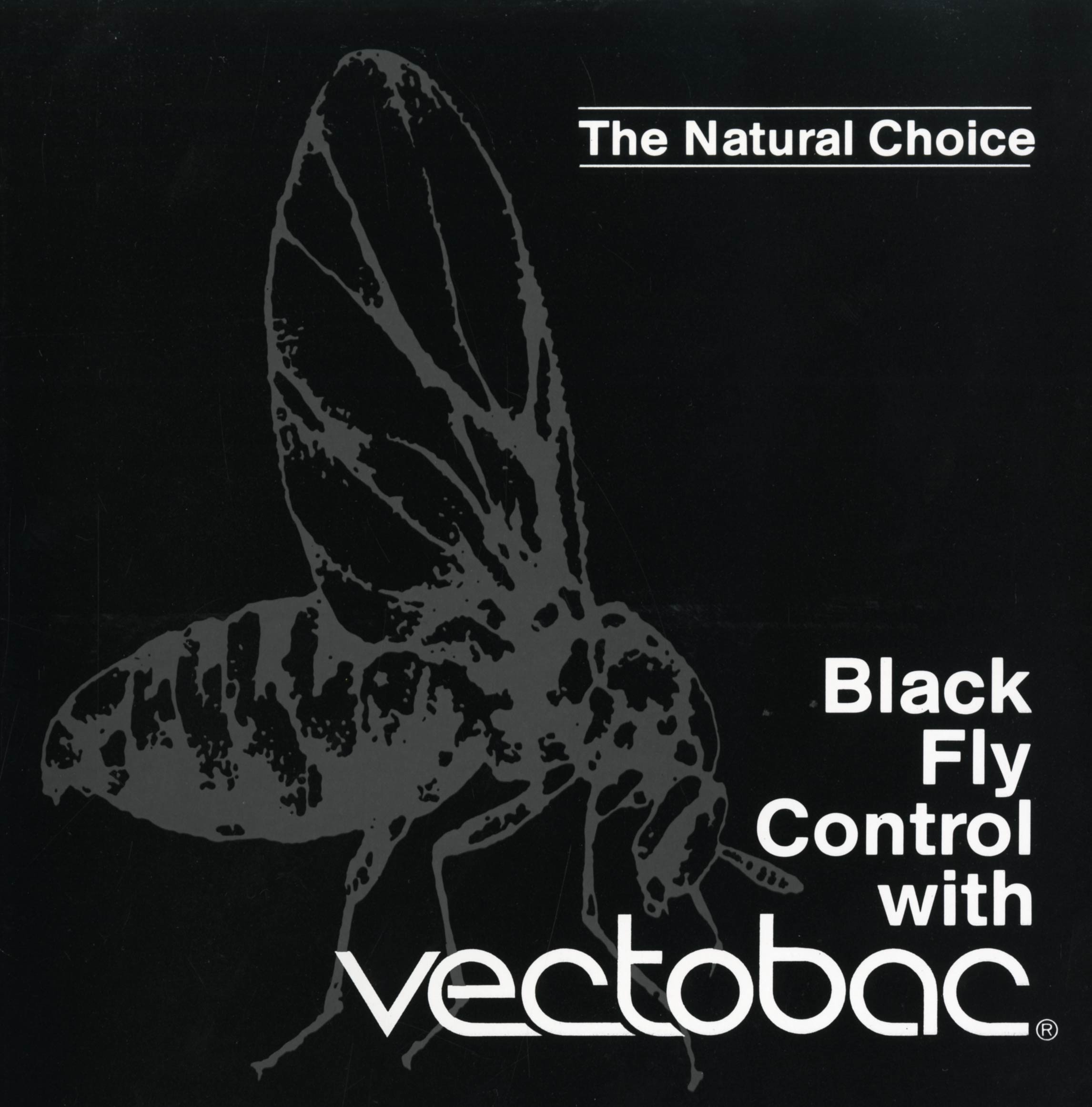
Then, in 1976, researchers in Israel discovered a new strain of bacteria: Bacillus thuringiensis israelensis, or BTI. It produced a protein toxic to filter-feeding larvae, specifically black flies and mosquitoes, but harmless to fish, birds, and humans. Molloy’s team pivoted. Between 1978 and 1982, they ran field tests, confirming that BTI could knock back fly populations without the collateral damage of chemical sprays.[v]
In 1983, Indian Lake became the first Adirondack municipality to roll out a BTI-based control program. Instead of planes, crews walked the streams, applying the larvicide directly to the cold, fast-moving water where black flies breed. The larvae ingested the toxic protein crystals and died; the adult flies never emerged.[vi] Fish kept feeding. Bees kept foraging. For Molloy, it was vindication. For Duflo, it was a threat. And for the towns caught between them, it was a choice.
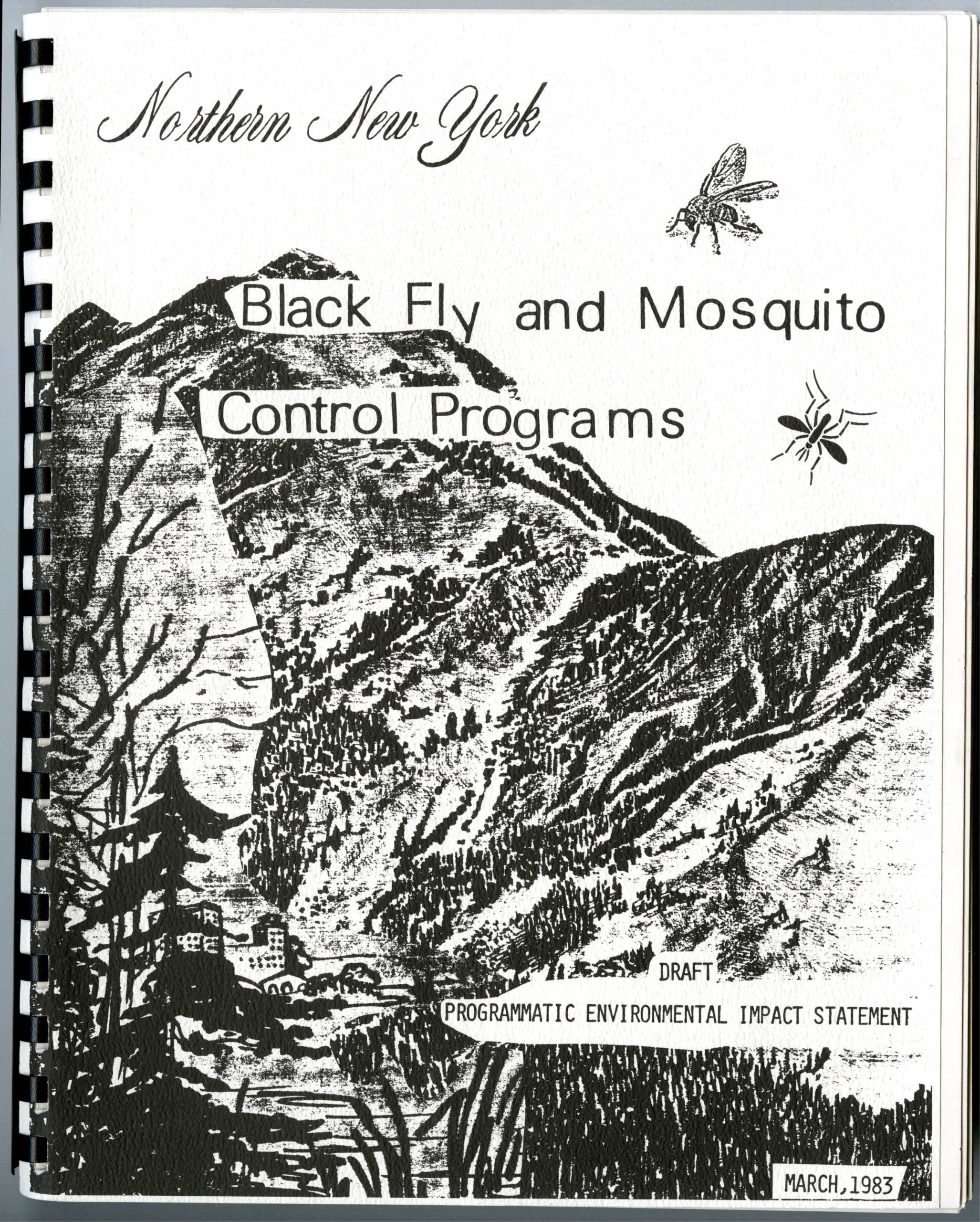
What followed was a decade of patchwork battles across the park. Some municipalities embraced BTI early: Chester and Horicon switched in 1985, organizing stream mapping and training local crews to apply the larvicide on foot. Others resisted. Upfront costs of BTI were higher: waterway mapping, worker training, and labor-intensive application.[vii] Aerial spraying was a fixed cost, even if the chemicals killed more than just flies.
In 1990, Duflo began championing a new pesticide called Scourge whilst critiquing BTI land application as expensive and ineffective. That April, the Town of Webb approved an environmental impact statement for Scourge, spraying over the objections of residents who packed the meeting to oppose it. “Here we have an illegal EIS being passed by a town board who has not read it,” one local fumed, “in a room full of residents asking them not to approve it.”[viii]
Two months later, Attorney General Robert Abrams sued thirteen townships and Duflo, temporarily restraining aerial spraying across the region.[ix] Contentious, sometimes illegal, spraying continued in Lake Placid and North Elba into the early 1990s. By then, though, the momentum had shifted. Only six Adirondack towns were still considering aerial spraying in 1991; ten had already switched to BTI. By 2000, the bacterial larvicide had become the regional norm.[x] Molloy’s careful science had won out.
Or had it? Duflo Spray Chemical remains in business operating out of Lowville, NY, selling its services to municipalities across the state.[xi] And across the Adirondacks, plenty of towns opted out of treatment altogether, whether from tight budgets, ecological principle, or a quiet acceptance that some battles aren’t worth fighting. The black flies, after all, always come back.

Rachel Ameen is a Syracuse University geography graduate student researching how wildlife—from iconic loons to black flies—shapes Adirondack tourism. Her work was supported by the ADKX Research Fellowship program, which grants scholars access to museum archives to explore regional history and culture.
[i] Metcalf and Sanderson. Black Flies, Mosquitoes, and Punkies of the ADKS. New York State Museum Circular, March 1931.
[ii] From Woodcraft by Nessmuk; A.W. Allison, Terrace Park, Ohio, published in NYS Conservationist, August-September 1956, p. 47
[iii] “Bugs, Ugh Ugh, Spray Now, Pay Later?”, Adirondack Daily Enterprise, June 16, 1972
[iv] Molloy, Daniel and Hugo Jamnback. “BF [Black Fly] Trio of Experimental Controls.” The Conservationist, 1975.
[v] Molloy, Daniel and Hugo Jamnback. “Field evaluation of Bacillus thuringiensis var. israelensis as blackfly biocontrol agent and its effect on non-target stream insects.” Journal of Economic Entomology, 1981.
[vi] Ameen, Rachel. Black Flies in the Adirondacks: Comprehensive Field Notes, Section VIII: “BTI Implementation Timeline
[vii] Black Fly and Mosquito Control Program Draft PEIS, March 1983
[viii] Failing, Wayne. Quoted in Adirondack Daily Enterprise, June 7, 1990.
[ix] Abrams, Robert (NYS Attorney General). Lawsuit filed against Jeffrey Duflo and 13 townships, June 1990.
[x] Ameen, Rachel. Black Flies in the Adirondacks: Comprehensive Field Notes, Section VIII: “BTI Implementation Timeline
[xi] https://www.duflospray.com/Duflo%20Home.html
Recent Posts
 A Masterpiece Reproduced: The Legacy of Caleb Chase at the 2026 ADKX GalaJuly 8, 2026 - 11:50 am
 Teacher Ambassador SpotlightMay 5, 2026 - 4:54 pm
- Bug Off: Duflo, Dope, and the Adirondack Fight to Control Pest ControlMay 1, 2026 - 2:13 pm
 Adirondack Lumber Camp MusicFebruary 2, 2026 - 8:52 am
 Balsam Traditions-Balsam CuresApril 4, 2017 - 7:32 pm


 English
  French
  Spanish