ADKX Stands In Solidarity

BLUE MOUNTAIN LAKE, N.Y. – June 2, 2020 – The Adirondack Experience, The Museum on Blue Mountain Lake stands in solidarity with communities around the world who are raising their voices to create meaningful change. We recognize that there is much work to be done to bring diversity, equity, accessibility, and inclusion into our communities. We remain committed to our mission of collecting the stories of the people of the Adirondacks and, as an institution, acknowledge the importance of expanding our narratives to provide a voice to underrepresented and marginalized groups. In challenging times like these, we must remember that we are stronger together and that by listening, we better understand and respect each other. #BlackOutTuesday #theADKX

Covid-19 Update

BLUE MOUNTAIN LAKE, N.Y. – March 31, 2020 In response to the novel coronavirus, which has closed the doors of all cultural organizations across New York State, Adirondack Experience (ADKX) will reach out to audiences in 2020 virtually rather than welcoming them to its campus in Blue Mountain Lake.

“It is unclear at this time whether the compulsory closing of public gathering places will be lifted in time for the July – August period when we see most of our visitors,” said David Kahn, ADKX Executive Director. “Our concern for the health and safety of our staff and visitors outweighs our desire to provide in-person programming this season. The current uncertainty also makes it impossible for us to hire seasonal staff who operate our gift shop and café, our boating experience and children’s programs, as well as engaging visitors in our galleries.”

ADKX plans to keep its entire year-round staff on the payroll during this difficult period. “Our staff is one of the pillars of the Adirondack Experience,” said ADKX board co-chairs Rob Searle and Anne Van Ingen. “Although this may challenge us financially, we recognize that our wonderful staff’s talent and passion will ensure our future success. Even in this most difficult time, they have been generating new and creative ideas to keep our audiences informed and excited with virtual programming.”

The ADKX staff is already at work developing plans for virtual programming through the end of 2020, making the ADKX’s world-class collections and experts accessible to the public in new ways. Each year, the ADKX provides free programming to over 11,000 school children in their classrooms and onsite. The staff will now offer students the opportunity to learn at home. Online lectures, workshops, and other programs will be developed for adult audiences and soon complement virtual exhibitions. In addition, as the key stewards of the Adirondacks’ cultural and social records, ADKX curators have already begun documenting the impact of the coronavirus on the North Country’s people and businesses. While visitors may not be able to come to the ADKX this season, the ADKX will come to them in new and exciting ways.

Adirondack Experience Launches New Digital Experience for 2020!

BLUE MOUNTAIN LAKE, N.Y. – May 5, 2020Adirondack Experience, The Museum on Blue Mountain Lake is excited to announce the launch of its new digital experience – ADKX@HOME. This new website focuses on a pandemic collecting initiative, delivering fun educational activities for the whole family, and making the ADKX’s world-class collections and experts accessible to the public in new ways.

As the key stewards of the Adirondacks’ cultural and social records, ADKX curators have begun documenting the impact of the coronavirus on the North Country’s people and businesses. Through the Documenting the Pandemic section of the new website, visitors can share their stories and objects with the ADKX. Photos, objects, and written and recorded stories will help future historians understand this moment in time, and allow us to share with each other as our history unfolds.

“This is really unprecedented. By collecting now as things are happening, we can give future generations a better understanding of this extraordinary moment in time,” said ADKX Chief Curator Laura Rice. “Perhaps as people look back, they will be better prepared to cope with similar crises. We’d love to hear from business owners, volunteers, medical staff, teachers, students, parents, essential workers—everyone has a story to tell.”

ADKX staff are now working to deliver curriculum-based learning modules to teachers and students at home each week as well as resources and activities for the whole family to enjoy. These activities include ADKXpositions – a weekly Adirondack-themed writing prompt to inspire young creative writers; and Folklore Fridays – a video series delivering stories of regional legend and lore with lessons on how to create your very own Adirondack tall tale.

Several of the new online activities including Design Your Own Hermit Hut and Where’s Noah center on the lifestyle of famous Adirondack hermit Noah John Rondeau. Visitors can also download our whimsical Adirondack coloring and activity pages featuring several drawings by Arto Monaco.

Additionally, the new webpage offers a look at ADKX Featured Collections reflecting on the stories of the healing power of the Adirondacks, the quiet beauty of the landscape, and people who have lived, worked, and played here. Visitors will also find a fun assortment of artwork from our collection as well as photos of campus that can be used as virtual backgrounds for conference calls, check-ins, and other virtual communications.

While visitors may not be able to come to the ADKX this season, the ADKX will come to them in new and exciting ways. For ongoing updates about the ADKX and its virtual programming, please visit www.theadkx.org.

About Adirondack Experience, The Museum on Blue Mountain Lake

Adirondack Experience, The Museum on Blue Mountain Lake (ADKX), accredited by the American Alliance of Museums, shares the history and culture of the Adirondack region through interactive exhibits, hands-on activities, and culturally rich collections in more than 24 historic and contemporary buildings on a 121- acre campus in the heart of the Adirondacks. The museum is supported in part with donations from the general public, with some general operating support made possible by the New York State Council on the Arts with the support of Governor Andrew Cuomo and the New York State Legislature. For additional information, call 518-352-7311 or visit www.theADKX.org.

# # #

Balsam Traditions-Balsam Cures

The Balsam Fir tree has been an important natural resource for the Adirondack region for many years. Below are excerpts from a poster series entitled “Balsam Traditions” that illustrate the seasonal uses and importance of balsam.

Wilderness Cures

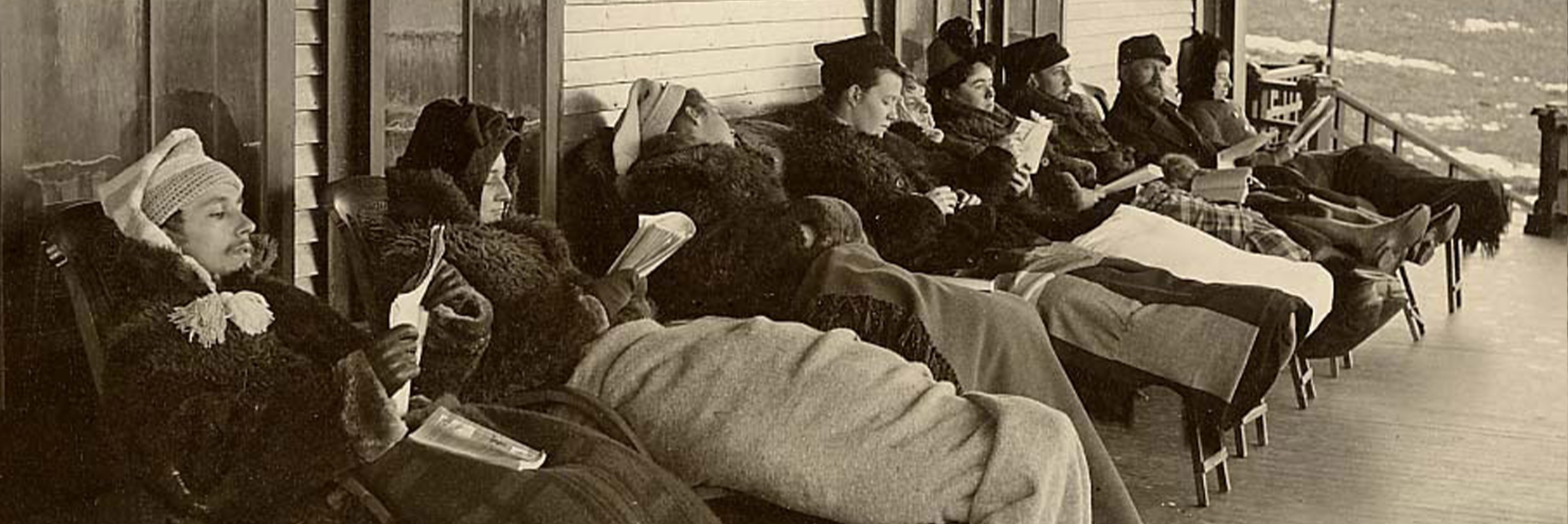
“Pine, balsam, spruce and hemlock trees abound, and the air is heavily laden with the resinous odors which they exhale…(exerting) a most beneficial influence on diseased mucous membranes.”
Dr. Alfred L. Loomis, Address to the Medical Society of the State of New York, 1879.

Dr. Edward Livingston Trudeau opens his sanatorium for tuberculosis patients at Saranac Lake in 1884.

“I think the greatest benefit is to be derived from being in the woods in early spring, when the pine, hemlock, and balsam first begin to bud out. I am told that at that time the atmosphere is especially sweet and healing. The fresh, pure, medicinal air of the Adirondacks is the best medicine in the world.”
Letter by L.C.F. of Scranton, PA, April 24,1885, in Joseph Stickler, The Adirondacks as a Health Resort, 1886.

In 1869, “Adirondack” Murray describes the case of a young man given up as a hopeless consumptive by city doctors, who had been carried into the Adirondacks, so his family thought, to die. Sleeping on his bed of balsam and pine, the invalid gradually inhaled their pungent and healing odors. Day by day he grew stronger. Five months later he came out to civilization again, sixty-five pounds heavier, carrying his own boat over the portages, restored to the quick.
William H.H. Murray, Adventures in the Wilderness, 1869.

Home Remedies

“A bit of balsam pitch mixed with a teaspoon of sugar was Uncle Delbert’s cold remedy. I also remember a balsam pillow being placed under a sickly neighbor’s head at night, to help her breathe easier while she slept.
Rev. Daisy Allen, interviewed by DeGarmo, 1987.”

Margaret Merwin remembers her father telling about the time in a lumber camp when some of the men started throwing the pancakes hot off the griddle, and one landed on a man’s arm. They peeled the pancake off, and rushed “right out in the woods and got balsam pitch. Just the clear balsam pitch and put it all over that and he never had any trouble with it at all.”
Interviewed by DeGarmo, 1989.

Timbuctoo: African American History in the Adirondacks

The Adirondack Mountains have a rich history with astonishing ties to major national events. It may be a surprise to some that the wilderness of the Adirondacks played an important role in the Underground Railroad, and for a period was home to the famous John Brown. Even more interestingly, the small town of North Elba, New York was the site of an experimental free black settlement established through the philanthropy of Gerrit Smith, a well-known abolitionist.

Timbuctoo

The settlement, which John Brown referred to as Timbuctoo, was Gerrit Smith’s response to the New York legislature’s reinstatement of a twenty-one-year-old law denying black men the right to vote unless they owned $250 in land or a home. In the fall of 1846 Smith announced his settlement plan that would endow three thousand grantees with plots of forty acres of land in the Adirondacks. While this untouched land was not worth $250, Smith believed with cultivation it could achieve that value, and in turn provide black men with a means to vote.

The majority of those endowed with land were literate city folk, completely new to farming. Many of these settlers had been cooks, coachmen, or barbers, but had never been farmers. The lack of experience made the difficult land of the Adirondacks all the more challenging for these families. Very few of those endowed with land were actually able to stay and carve out a life on their plot. Census reports from 1850-1870 show that there were only thirteen black families listed in North Elba and by 1871 that number dropped to two. The Lyman Epps family was the only one that remained in North Elba permanently. The last remaining member, Lyman Epps Jr, passed away in 1942.

One factor contributing to the low numbers of grantees settling the land was that relatively few were even able to make the move to North Elba. Although the land they were granted was free, resources to move and cultivate the land were not readily available. While there were those that made the move, many found life in the settlement too difficult and moved out. The few families that settled the area did so through grueling labor and were able to clear and cultivate the land, ensuring their right to vote. Unfortunately, while Smith’s land grant was revolutionary, it was not able to succeed.

John Brown

The members of the North Elba colony benefited from their famous neighbor John Brown. After speaking with Gerrit Smith, Brown purchased land adjacent to Timbuctoo in order to teach the new residents how to productively farm their land. As most settlers were from urban backgrounds, they had to learn how to clear and effectively cultivate the challenging land of the Adirondacks.

Brown moved his entire family to North Elba in 1849. However, business interests and his abolitionist work frequently kept him away from the farm. His family stayed on the land and with the help of Lyman Epps built a farmhouse.

John Brown is well known for his militant abolitionist work, most famously the raid on the federal arsenal at Harper’s Ferry in 1859. He was also a leader of an antislavery guerilla group that led attacks on pro-slavery towns, and a “conductor” on the Underground Railroad.

Brown was convicted of treason for his involvement in the raid on Harper’s Ferry and was hanged on December 2, 1859 in Virginia. His body was then returned to his families’ farm in North Elba, where he was buried in front of his home. In 1899, the remains of several of those who fought and died at Harper’s Ferry were moved and buried alongside their leader in North Elba. Brown’s farm and grave are now a New York State Historic Site attracting thousands of visitors every year.

Gerrit Smith

While Gerrit Smith is most identified with the movement to abolish slavery, he was also a passionate reformer supporting causes such as; prison, land, and national dress reform, vegetarianism, Irish independence, and woman’s suffrage. Smith was a pacifist, believing in opposition to slavery only through peaceful means. However, there is evidence that Smith provided support for John Brown’s raid on Harper’s Ferry.

Many of the Underground Railroad stations in New York State were located on land owned by Gerrit Smith. Gerrit Smith’s land grant scheme, Timbuctoo was emblematic of his agrarian beliefs. While it was an inherently flawed project, the experimental community in North Elba was a progressive vision to confront the racial injustices of state policy.

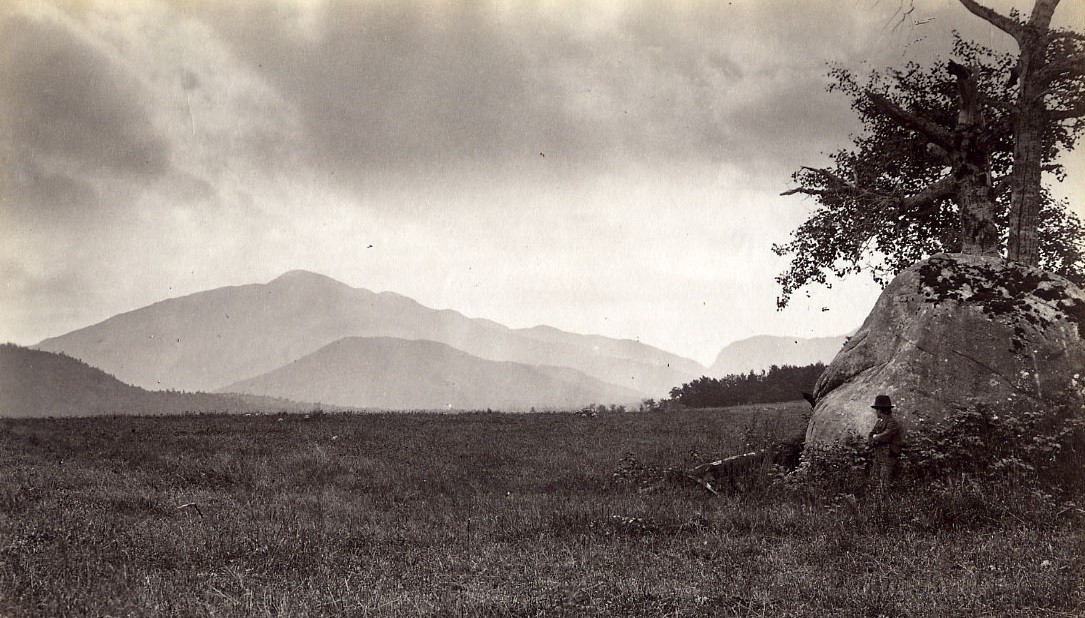
Photo Above: A view in the township of North Elba in Essex County, the location of the vanished Black community of Timbuctoo. The photograph, taken by Seneca Ray Stoddard, captures the McIntyre Mountains and Indian Pass looking south from North Elba, circa 1875.

Adirondack Travel

The beauty of the Adirondacks has attracted visitors since the early nineteenth century; between 1880 and 1920 Blue Mountain Lake, New York (home of the Adirondack Museum) was among the most fashionable destinations in the northeastern states.

Because of the secluded nature of the Adirondack Park, vacationing travelers have historically reached the area in a variety of interesting and often uncomfortable ways. Transportation was on their minds as well — because a journey to the Adirondacks was an adventure! The inaccessibility of the region enhanced its attraction to those with the means and leisure to make the long journey. For some, the discomfort of the trip was almost a bragging right attesting to the traveler’s ruggedness in weathering such an undertaking.

In 1880, a trip from New York City to Blue Mountain Lake could take upwards of 26 hours, covering 270 miles and involving a variety of forms of transportation. One route took travelers from the city by night boat up the Hudson River to Albany, N.Y. The boat would leave New York City at 6:00 p.m. and arrive in Albany the next morning at 7:00 a.m. From there they immediately boarded the Delaware & Hudson railroad line to Saratoga Springs, N.Y. where they would change to the Adirondack Railway, arriving in North Creek, N.Y. at 12:05 p.m. From North Creek passengers would board the Blue Mountain stagecoach that departed at 12:25 p.m. and arrived in Blue Mountain around 8:00 p.m. In 1879, the fare from North Creek to Blue Mountain Lake by stagecoach cost $3.00 and included dinner! One traveler in 1880 recounts the 30-mile trip to Blue Mountain Lake as creating a “remarkable sense of loosened joints, sore spots and general fracture.”

While the discomfort of the rough mountain road was usually the passengers’ only concern, the morning of August 14, 1901 brought a new chapter to the history of the Blue Mountain Stage. Much like a Wild West story, two highwaymen held up the stagecoach from North Creek to Blue Mountain Lake

Three miles past North River, N.Y. two masked men appeared out of the forest and ordered the stage carrying four men and three women to stop. When the driver refused to do so, the highwaymen shot the two lead horses of the four-horse coach. After the stagecoach was stopped, three of the four male passengers fled into the woods to safety. While the robbers assured the women no one would be hurt, they did take all of the valuables on board including some contents from the mailbags. When the highwaymen disappeared into the woods it was estimated that they made off with $1000 worth of valuables. Despite a search by state and federal detectives, the men were never caught.

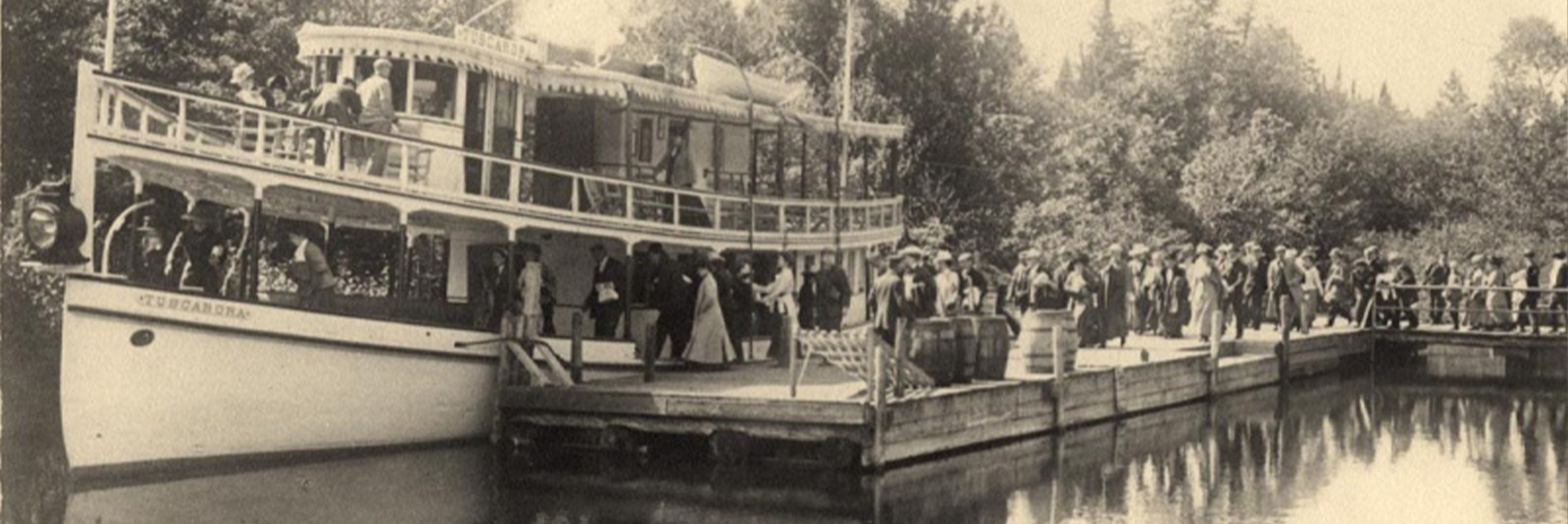
Another unique means of Adirondack travel in the later part of the nineteenth century was by steamboat. There was an intricate system of steamboats and carries (a “carry” in the Adirondacks is a piece of land that connects two bodies of water. This is known as a “portage” in many parts of the world) that ferried guests through many of the lakes in the area. The boats provided a slightly more comfortable form of travel. Even though travelers still had to walk some distance over the land connecting waterways this form of travel was more pleasant than trips in the stagecoach or buckboard wagon.

By the 1920s, these methods of transportation became obsolete with the immergence of the automobile. R.E. Davies recounts his boyhood trips from Ridgewood, N.J. to Blue Mountain Lake taking Rt. 9W and following the Hudson River north through “every” small town. He remembers the roads being surfaced as far as Indian Lake, N.Y. where the highway became a single-track dirt road to Blue Mountain Lake. This part of the trip was a very slow process that “could not be made with the same speed as today.”

Visiting the Adirondack region has always held its level of difficulty and adventure. While now the region is easily accessible in cars on paved roads, getting to some of the more remote places by dirt road, foot or boat is reminiscent of trips made by the earliest travelers to the region.

Water Skiing

The earliest recorded trip on water skis occurred during the summer of 1922 in Minnesota. The term came in to common use in 1931. The Adirondacks saw a boom in recreational waterskiing in the 1940s. Boat-towed sports have been popular in the North Country ever since and increasingly controversial as well.

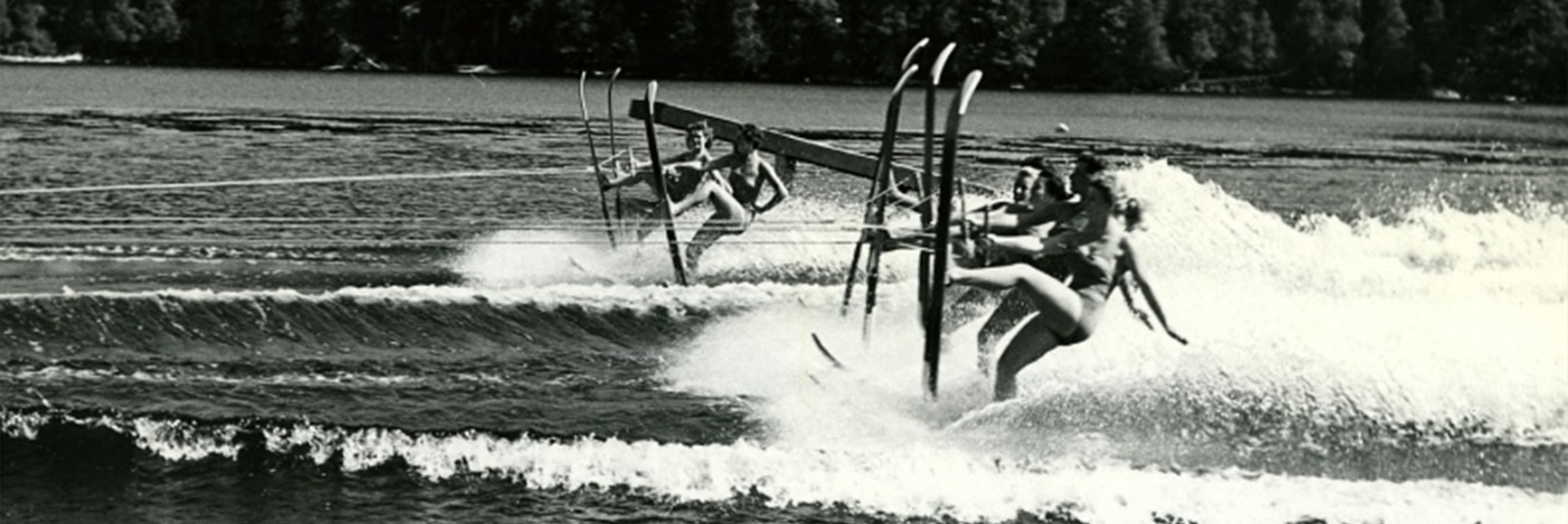
 In the early days of water skiing, there were also the freeboard and the aquaplane. Each was made from a wide wooden plank five to six feet long with a rounded nose. A rope from the towboat was attached directly to the aquaplane, while the person riding the freeboard held directly onto the rope. Some brave and talented riders added challenge to an already tricky task by perching on top of a chair or stepladder as well.

Charles Adams recounts his summers in the 1940s on Big Moose Lake, New York in Big Moose Lake in the Adirondacks: The Story of the Lake, the Land, and the People. He describes the watery tricks he and his friends came up with — or read about excitedly in magazines. Competitions to see who could top the other’s tricks on skis, the freeboard or aquaplane were hotly pursued. Jumps were built and slathered down with soap flakes. Human pyramids arose on skis or aquaplanes. Juggling on skis behind the boat was not unheard of. Competitions between amateurs sometimes turned into summer performances that spectators watched from shore. Adams describes “shows” he and his pals planned, and how they traveled to other places in the Adirondacks such as White Lake and Indian Lake, N.Y. to perform their tricks.

In the twenty-first century, boat towed sports have become more sophisticated, with mass-produced high-tech skis, wakeboards, kneeboards, and tubes. There are, of course, jet skis that require no boat at all. The days of tying clothesline behind the speedboat and strapping on homemade boards have passed. Recreational skiing is still popular on Adirondack lakes although not everyone is a fan.

Some see skiers as “wreaking havoc” and disrupting the beauty of peaceful Adirondack lakes. A conflict of interests has developed over the ways in which lakes should be enjoyed.

There has been a long-standing tension between those seeking the enjoyment of secluded, quiet recreation such as paddling, swimming, or camping along the shore and motorsport enthusiasts. Complaints of excessive noise, dangers to swimmers, ruined fishing, and shoreline erosion are sometimes cited in opposition to boat-towed sports and motorized boats themselves.

The Adirondacks are Burning: A Brief History of Forest Fires

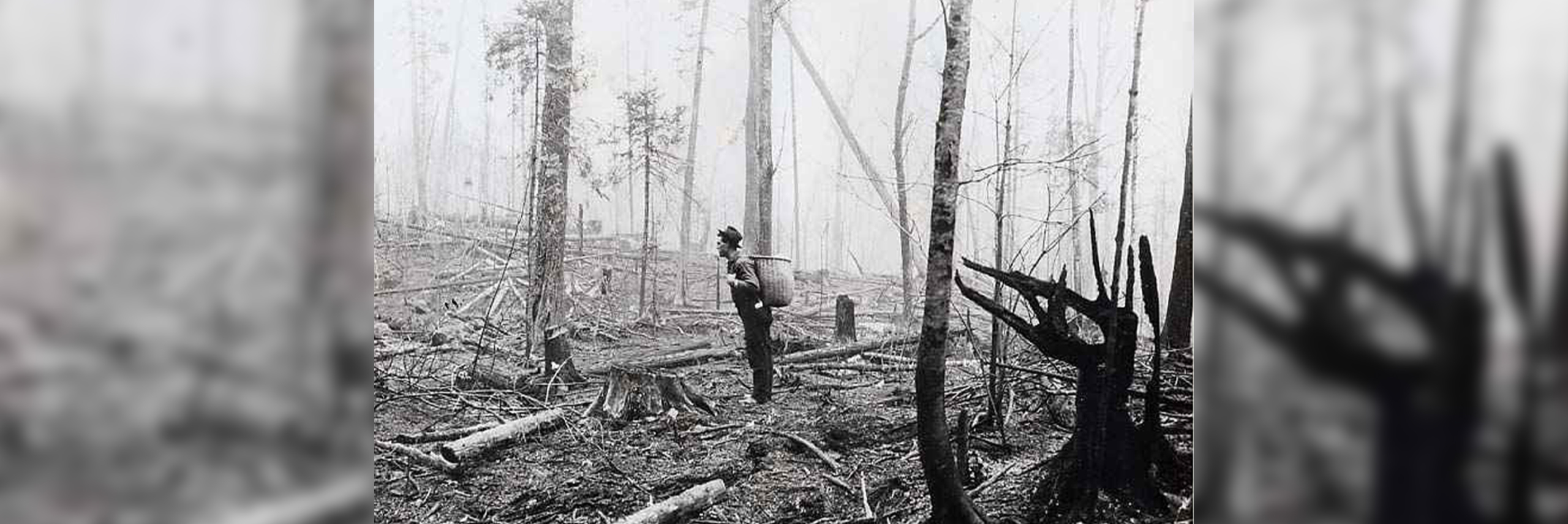
The Adirondacks have a long history of epic blazes. While there are no recent comparisons with the terrible devastation faced by the west, fire is no stranger to the vast North Country woodland. Whenever drought conditions exist, there is a heightened risk for fire. Following disastrous fires around the turn of the 20th century, especially those of 1903 and 1908, measures were established to prevent and detect fires, eliminating the scale of destruction that occurred in the Adirondacks a hundred years ago.

There are two main fire seasons in the Adirondack region, one in the spring and the other in the fall. The spring fire season stretches from the time that the snow melts until green leaves start to appear, usually from April until late May. During this time there is an abundance of dead leaves and vegetation on the ground from the previous autumn. Spring winds dry out this material, creating fuel for fires. Once foliage appears in late May the risk of fire decreases because of a greater amount of moisture held in at ground level.

The spring of 1903 was a perfect example of these conditions; the only spring moisture was supplied by snow melting in late March, followed by a seventy-two day drought. The unusually dry spring resulted in a number of forest fires that burned over 600,000 acres of land in the Adirondack Park. At this time few fire prevention measures were in place. Combined with primitive methods of fire detection, almost no mechanized equipment, and slow modes of transportation the conditions were right for the devastation that occurred in 1903.

In periods of drought a spark from a campfire, burning brush, or improperly extinguished smoking materials can ignite forests. In 1903 there were the added dangers of insufficiently regulated logging and railroad companies that actually triggered a number of the blazes.

During the early 1900s lumbering operations tended to follow railroad tracks for easier transportation. Both logging and railroad companies in the Adirondacks relied on steam locomotives that were commonly fueled by coal or wood, which had a tendency to send off sparks. While there was a law requiring engines used in the woods to be equipped with steel netting to prevent these sparks from escaping, very few companies adhered. The hundred-dollar fine for failure to comply with the law was a minor annoyance to wealthy companies, and did little to ensure that locomotives had screens or netting.

The center of the 1903 fires was at Lake Placid, New York. However fires also raged around the Adirondacks in Schroon Lake, Lake George, Olmsteadville, Newcomb, Ausable Forks, Saranac Lake and Clintonville. The fires were so significant that there were reports of cinders falling as far away as Albany, N.Y., 150 miles south of Lake Placid. The smoke from the fires even caused concern in Washington, D.C.

Five years later the Adirondacks would face the most devastating fire season in history, and endure blazes that burned on an off for four months. The most destructive fires would burn during the fall, the Adirondacks’ other fire season. In September 1908, New York City and Quebec City to the north were blanketed in clouds of smoke from fires raging in the Adirondack counties of Hamilton, Herkimer, St. Lawrence, Franklin, and Essex. As with the blazes of 1903, human factors would contribute to the devastation; the 1908 drought season coincided with the peak of logging and railroad traffic in the region.

Adirondack loggers were not known, at the time, for following safe logging practices. Fire prevention was not a chief concern. Most lumbermen were resistant to the idea of “limbing” or removing all tree branches, usually from conifer trees, before discarding the tops. This was because treetops were seen not only as waste, but the practice was also time-consuming.

Woods bosses hated to waste time. Instead of cutting the limbs off of treetops so that they would lie flat on the ground and decompose properly, loggers would simply discard the tops unlimbed. The treetops formed dense tangles of air-dried wood that became huge piles of tinder, needing only a spark to ignite. Often, as seen in 1903, railroad locomotives passing by would supply this spark.

Late September marked the climax of this fire season, with the worst single fire of all destroying the small community of Long Lake West, now Sabattis, N.Y. The fire was started on September 9, 1908 by the passing Mohawk & Malone locomotive when it shot off a spark that landed in trackside tinder. Other trains rushing men in to fight the fire further contributed to the blaze. It was reported that flames had spread all along the track from Horseshoe to Nehasane, a distance of 12 miles.

The Long Lake West fire destroyed everything in its path. While residents were evacuated, nothing was left of the town except charred embers. The heat generated by the fire melted barrels of nails into lumps. Miles of forest surrounding the town were incinerated along with a dozen homes, the church, a school, the Wilderness Inn, a livery stable with room for 200 horses that had been set free to fend for themselves, and Moynihan’s storehouse and freight warehouse containing 50 barrels of kerosene and 1,500 pounds of dynamite. The intense heat of this fire even twisted railroad track.

While the Long Lake West fire was not the only one of late September as fires raged all over the Adirondacks, it was by far the most destructive. The fires of 1908 were the worst of their kind and convinced the public that humans caused most forest fires, and therefore could be prevented. While the fires of 1903 were bad, most people at the time saw them as an act of God. It was not until 1908 that opinions started to change.

By 1909 many new laws were passed with the goal to prevent and detect forest fires earlier. These included requiring locomotives to burn only oil from April 15 through October 31, preventing the sparks that ignited so many fires. Logging companies were required by law to limb everything left behind. New systems of fire surveillance were adopted that included building fire towers and hiring state regulated “patrolmen.” Power was also given to the governor to close both public and private forests during times of high fire danger.

While there have been fires since, the many regulations that have been put in place since 1909 have prevented the scale of the historic 1908 fires from ever occurring again.

An Adirondack Presidential History

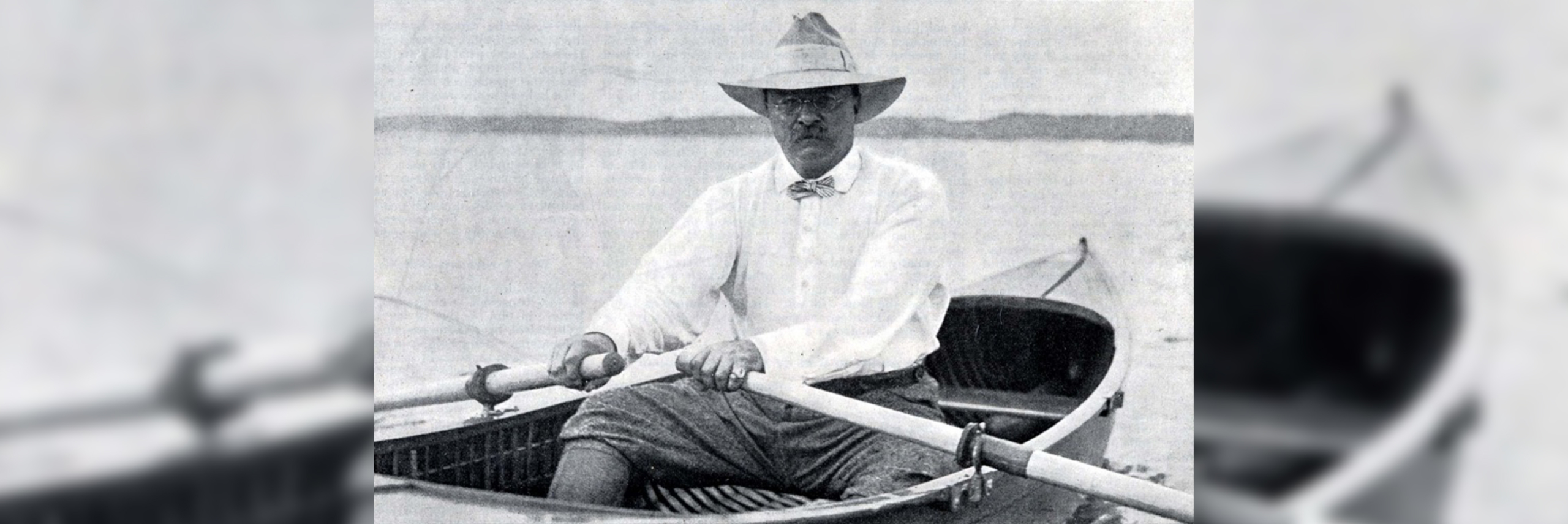
On the damp night of September 14, 1901 Vice President Theodore Roosevelt made his legendary night ride from the Adirondack Mountains to the Presidency of the United States of America. While Roosevelt’s first ascension to the post was not the result of being directly elected president, assuming the position as the result of the assassination of President William McKinley, he would go on to be elected for a second term in his own right.

Though the U.S. election of 1900 was far different than the televised spectacles we see today, the campaign trail was just as grueling. In a time before sound bites and private jets, some candidates spent an exceptional amount of time traveling the country carrying their message to voters. In fact, by November 3, 1900 Roosevelt had given more speeches and traveled further than any candidate in the nineteenth century, presidential or vice-presidential, with the exception of William Jennings Bryan four years earlier. However, in 1900 Bryan could not match Roosevelt’s travel and time on the campaign trail. In a quarter of a year, Roosevelt made over 673 speeches, at 567 towns, in 24 states, traveling over 21,000 miles.*

Roosevelt’s tireless campaigning, combined with the nation’s booming economy and the success of the Spanish-American War, led to McKinley’s easy re-election with Roosevelt as Vice President. However, during this term McKinley would not fulfill an entire year of service as president. On September 6, 1901, while visiting Buffalo, New York for the Pan-American Exposition, the president was shot at the Temple of Music while attending a reception. A man named Leon Czolgosz, whose hand was wrapped in a handkerchief appearing to be a bandage that was actually covering up a revolver, shot McKinley twice, once in the chest and once in the abdomen. Buffalo newspapers later described Czolgosz as either “a lunatic or an anarchist.”

Initially, it appeared that McKinley would rally from his wounds. While Roosevelt traveled to the president’s bedside from a luncheon at the Vermont Fish and Game League on Isle La Motte, on Lake Champlain, by the 10th of September the president made great improvements and Roosevelt’s presence was no longer required. To reassure the public, it was advised he leave Buffalo.

Roosevelt traveled to the Adirondacks to join his wife Edith and children at the remote Tahawus Club near Newcomb, N.Y. Upon arrival he arranged for guides to accompany him and his family for a September 12th trip up Mount Marcy, the tallest mountain in New York State. During this hike, on the shores of Lake Tear-of-the-Clouds, Roosevelt would receive word that McKinley had taken a turn for the worse. A local man named Harrison Hall made the climb to Roosevelt on Mount Marcy with a telegram announcing the president’s now grave condition.

Roosevelt was reluctant to depart immediately and informed his wife that because he had just been there, he would not return to Buffalo until truly needed. However, another telegram announcing that the president was dying banished thoughts of waiting any longer.

Shortly before midnight, Roosevelt traveled by buckboard wagon from the upper camp of the Tahawus Club to the North Creek, N.Y. train station located 35 miles away. By day, this trip would take at least seven hours.

The first portion of the trip would entail three changes of wagons, with fresh drivers and horses each time.

Roosevelt departed from the Upper Tahawus Club, traveling ten miles in two hours to the cabins of the Tahawus Post Office, where he would make his first wagon change.

From here he traveled an additional two hours and twenty minutes over a stretch of nine miles to Aiden Lair Lodge, a popular resort for sportsmen in Minerva, N.Y. Roosevelt once again changed wagons around 3:30 a.m. Mike Cronin, the proprietor of the lodge, would usher the Vice President the final sixteen miles. Despite a dark and slippery road, the two would make it to North Creek in record-breaking time.

His secretary William Loeb, Jr. met Roosevelt at the train station. Loeb delivered the telegram announcing McKinley’s death at 2:15 that morning. Roosevelt had ascended to the presidency on the dark, slippery Adirondack roads hours before.

Roosevelt, who wanted to lose no time getting to Buffalo, departed immediately aboard the fastest locomotive of the Delaware & Hudson Railroad. This trip would not be without incident: in the heavy fog of the morning, there was an accident. The locomotive collided with a handcar, and while the two men aboard survived, it would take an additional fifteen minutes to clear the tracks.** The remainder of the journey was without incident and the party arrived in Buffalo shortly after 1:30 p.m. Upon arrival, Roosevelt stopped at the house of Ansley Wilcox, a Buffalo friend, to have lunch and clean up from the journey. He borrowed “presentable” clothes from Wilcox who was a similar size.

Despite the protests of Wilcox, Roosevelt decided that rather than follow the Cabinet’s decision to hold the inauguration at Milburn House where President McKinley’s body lay, it would be more appropriate to conduct the ceremony at the Wilcox Mansion. He insisted that he would only visit the Milburn House to pay his respects.

After visiting the Milburn House, Roosevelt returned to Wilcox Mansion where he was officially sworn in as president in a small ceremony attended by members of the Cabinet, local dignitaries, and reporters. There were only about forty-three attendants in total.

* Information found in The Rise of Theodore Roosevelt by Edmund Morris, 1979.
** Information found in Theodore Rex by Edmund Morris, 2001.

The Philosophers' Camp at Follensby Pond

In the summer of 1858 an expedition of ten scholarly men from Cambridge and Boston, Massachusetts embarked on a trip to Follensby Pond in the Adirondacks, creating what came to be known as the Philosophers’ Camp at the shore of the pond.

Follensby Pond is located in the southwest corner of Harrietstown, New York between Raquette Falls and Tupper Lake. The name of the pond has been spelled many ways in the past; during the time the philosophers visited the area, it was spelled Follensbee. Some early Adirondack guidebooks also referred to it as Folingsby. The pond is named for a recluse known as Captain Folingsby who left England for unknown reasons around 1820. He sought seclusion in the Adirondacks and settled at the pond that is now his namesake. The proper spelling of his name is unknown, thus the variations in spelling.

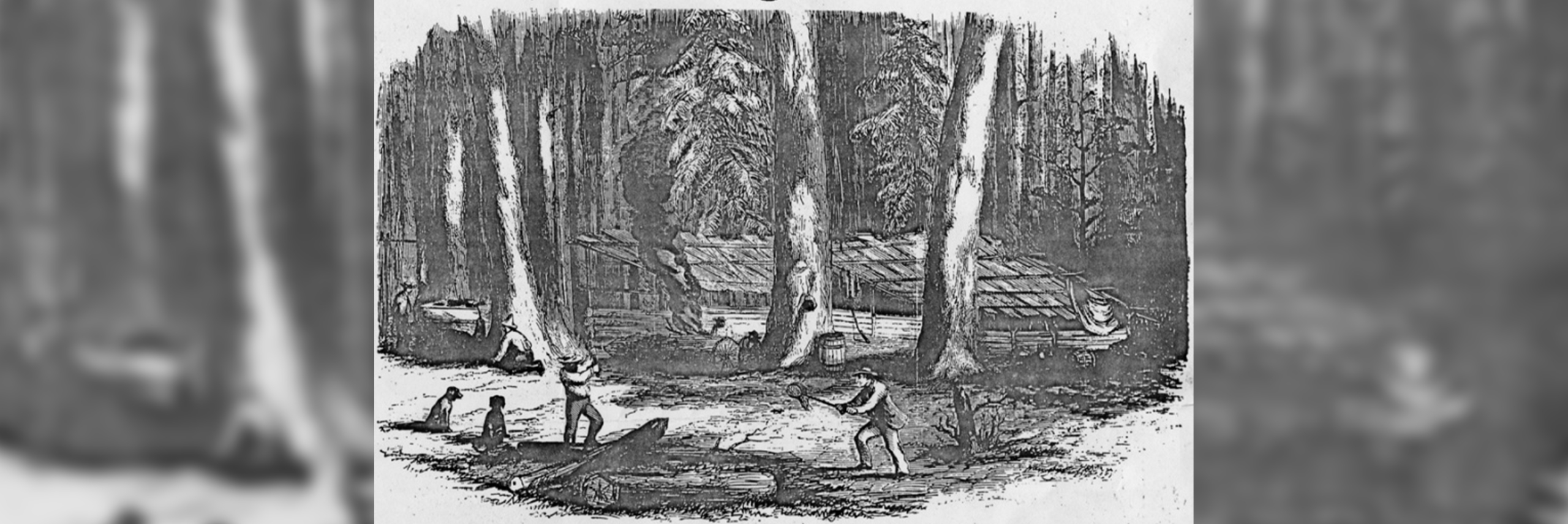
The group constructed a rough structure built entirely of materials at hand. The lodging consisted of three spruce bark walls supported by two trees, and contained a fireplace and beds fashioned from evergreen branches topped with soft fragrant cedar.

The trip is remembered not only for the well-known artists and intellectuals who ventured together into the Adirondack wilderness but also for the lasting impact on the region and notions of preservation.

In spite of the name that became associated with the outing, the men were not necessarily “philosophers” by training or occupation. The party consisted of two poets, Ralph Waldo Emerson and James Russell Lowell; two scientists, Louis Agassiz and Jeffries Wyman; two lawyers, Ebenezer Hoar and Horatio Woodman; two doctors, Estes Howe and Amos Binney; John Holmes, the younger brother of writer Oliver Wendell Holmes, and William James Stillman.

William James Stillman an artist, writer, and skilled woodsman who had made many trips to the Adirondacks, organized the philosophers’ trip. He first visited the “Northern Wilderness” in 1854 to find more exciting subjects for painting than were available in his native Schenectady and developed a great affinity for the area.

After founding The Crayon, the first art magazine in America, Stillman traveled to Cambridge in search of financial support and to solicit subscriptions, articles and poems. He was introduced to poet James Russell Lowell and made new contacts, many of which would travel with him to the Adirondacks in 1858.

Each member of the party held decidedly different views and came from various intellectual standpoints. However, they all seemed to share a romantic and intellectual reverence for nature and a common view of the importance of natural beauty to artistic and intellectual creativity. These views would be represented in their art and writing and be used to demonstrate the value of preserving the natural beauty of the Adirondack wilderness.

The Philosophers’ Club traveled to the Adirondacks at a time when common notions of wilderness were rapidly shifting. Earlier views held that land only needed to be attended to for capital gains based on what could be garnered through farming, mining, and other acts that would return a profit. By the middle of the nineteenth century, there was a swing in intellectual thinking that demonstrated a belief in the spiritual power of the beauty of landscape and wilderness to inspire. There was a sense that nature provided an escape from the responsibilities of urban living.

Each member of the camp sought to ensure their own unique experience with the tranquility of the Adirondacks and the ability to individually interact with the “serene wilderness.” The month the scholars spent at Follensby Pond was occupied with hunting, fishing, paddling, studying plants and animals, and exploring the country. For a brief period, the quiet shores of Follensby Pond rang with lively conversation and debate.

This was also a time of creation; Emerson penned his poem “The Adirondacks” a poetic description of the trip, while Stillman chronicled the experience in his painting “The Adirondack Club.” Agassiz discovered a previously unknown freshwater sponge on the trip to Follensby.

The following fall there was great interest in further Adirondack expeditions. This attraction generated the formal organization of the Adirondack Club. Stillman was appointed the task of finding a permanent location for the club. At the time he was very ill suffering a bronchial attack and unable to travel further than the Saranac Lake region. He enlisted the help of local guides to map a tract of 22,500 acres for purchase. For $600 he acquired a section of wilderness on Ampersand Pond south of the Saranac Lakes that had been forfeited to the state and placed on sale.

“Camp Maple” was built and the club expanded, adding to its membership many prominent intellectuals from Boston and Cambridge. However, the summer of 1859 would be its most popular; the Civil War intervened and the club was neglected.

The philosophers’ time and creative work in the Adirondacks would contribute to a shifting view of nature and preservation. Their work provided evidence of the importance and value of preserving wild places as a source of inspiration and national heritage. Many of their ideas are still echoed in current discussions about preservation. The site of their first camp on Follensby Pond carries on this discussion. The Nature Conservancy’s recent purchase of Follensby Pond has renewed debate over preservation and the economic reality of the state’s role in this process.

Land preservation in the Adirondacks is a timely topic of conversation as trying economic times coincide with concerns over environmental degradation. While the discussion has moved past the philosophers’ goal of simply maintaining beautiful natural places, their views are still at the heart of this debate.