Balsam Traditions-Christmas Market

The Balsam Fir tree has been an important natural resource for the Adirondack region for many years. Below are exerpts from various sources that were used in a Balsam Traditions poster series discussing the seasonal importance of balsam.

“As a Christmas tree, balsam has two prime advantages over other species: fragrance and durability. The smell of a fresh-cut balsam is something out of this world—or at least out of the city world. It is like bringing a piece of the Adirondacks indoors.”
“The Balsam,” in NYS Conservationist, December 1946.

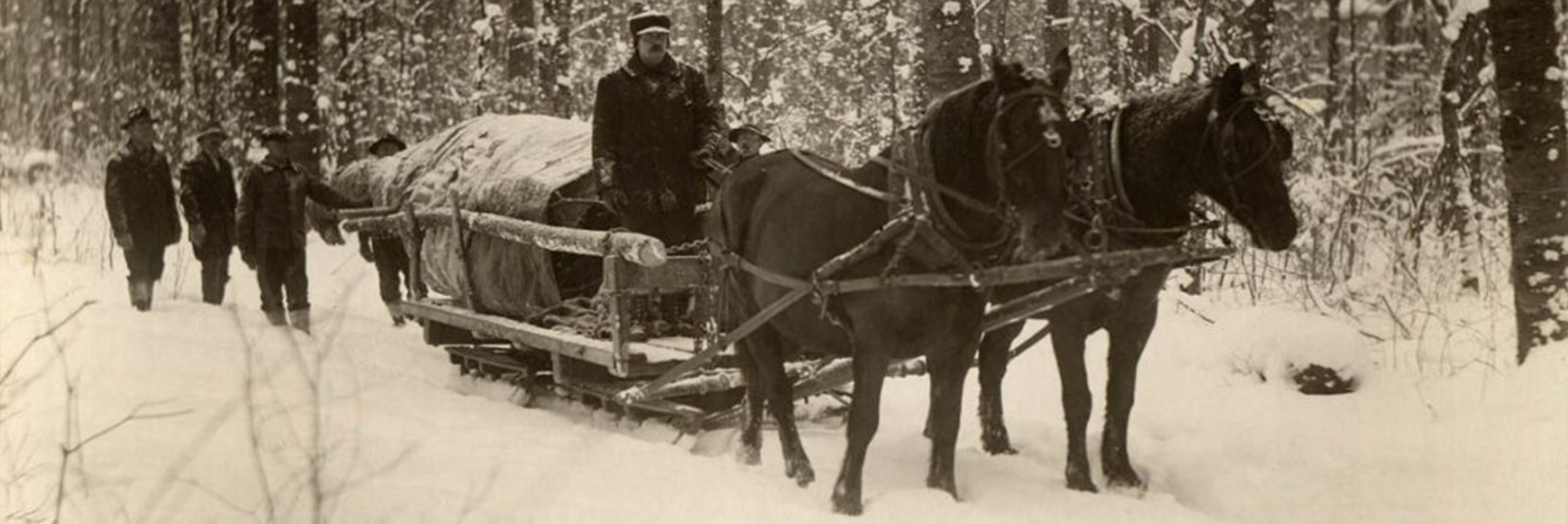
“The Dealers in Christmas trees come mainly from Herkimer and other counties in the north woods of this State… The men who deal in Christmas trees are all woodsmen, who, after cutting their own stock, take it to market.”
NY Times, December 17, 1893.

“Jobbers who supply the markets and retail trade must begin their harvest preparations early. By October or November they must have located a source of supply and arranged for men to cut and transport the trees to market. Some buy from the owners on the stump, and cut and hail them to market themselves. Others buy trees cut and bundled at the roadside.”
A.S. Hopkins, “Christmas Trees and Land Use,” in NYS Conservationist, December 1946.

“Beginning in November of every year, huge truckloads of Christmas trees roll out of the Adirondacks, destined for the city markets. In former years entire train loads of trees might be seen as they made their way southward; but, with the demise of the Adirondack railroads, motor trucks now serve the same function.”
Floyd S. Hyde, Adirondack Forests, Fields, and Mines, 1974.

“The great market for Christmas greens in New York is along the North River front… Here the busy streets seem forest roads, so lined are they with trees of spruce, balsam, pine and cedar.”
NY Times, December 19, 1878.

“The place where the tree market is situated is just at present a favorite spot for loungers. They come by parties, lie around on the fragrant boughs, and inhale the fragrant and pungent aroma of the trees.”
NY Times, December 17, 1893.

“Quite a business had grown up on the Islands in Lake Champlain in the shipment of evergreens to New York City for holiday decorations. One day in early December 1888, the steamer Maquam brought 82 bags to Plattsburgh where they were sent south by rail.”
Essex County Republican, 1888.


“During November many old-fashioned housewives are busy making Christmas presents for their less fortunate friends who have to live in cities or far from the pine woods. These presents do not change from year to year and are nonetheless welcome for the lack of novelty. They are pine pillows, filled with fresh-cut evergreen needles in lavishly decorated or utterly simple cloth cases. One whiff from the box when opened in a city and the breeze that furrows an evergreen mountainside or ruffles a mountain lake comes softly into the room. They may be called pine pillows but the housewife who is particular about her handiwork raises Cain if the men dare to bring anything in from the woods for her except balsam.“
William Chapman White, Just About Everything in the Adirondacks, 1960.

Information from Balsam Traditions (a poster series) by Todd DeGarmo. Adirondack Museum and Crandall Library, 1992, with support from the New York State Council of the Arts — Folk Arts Program.
Great Camp Foxlair

When you think of the interior decoration of Adirondack great camps, the first image to come to mind is usually of rustic furniture. However, this was not the case for great camp Foxlair, located near North Creek, New York, whose owner Richard Alexander Hudnut fashioned his residence in a French chateau style.

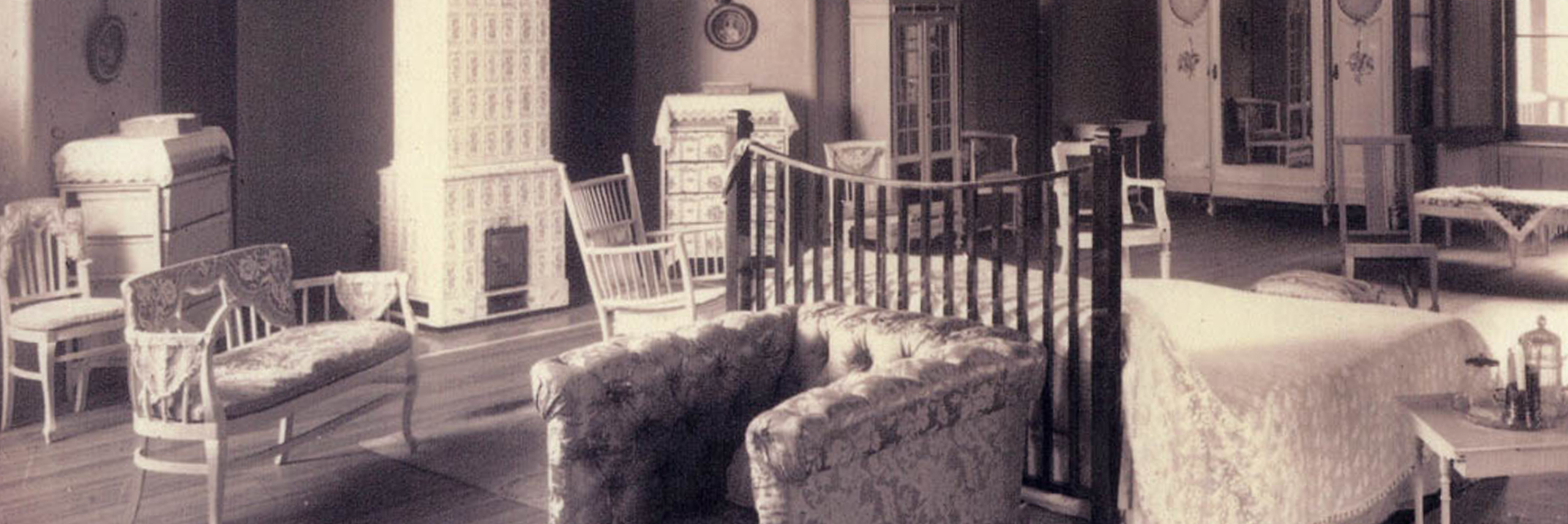
The tile stove in the photograph is a unique object in the Adirondack Museum’s collection. While it is not currently on display, it can be viewed when the museum offers curator-led tours of the stored collection. This stove, just one of the French imports furnishing the camp, is a wonderful and interesting object that highlights the difference in Foxlair’s décor. The stove measures 6 feet tall and is made from approximately 220 hand-painted tile blocks. It was imported from France in 1905.

The Foxlair stove not only illustrates an interesting contrast within the museum’s collection; it also provides a link to a camp that is no longer in existence. This piece was added to Foxlair in 1905; the camp was a family residence until 1938. Foxlair was then endowed to the Police Athletic League of New York City as a summer camp for boys. During this time the stove was hidden behind a false wall for protection. New York State bought the camp in 1959, and then due to impending changes within the state’s land use policy, the family viewed it imperative to rescue the stove in the mid-1960s, disassembling it piece by piece and removing it from the residence. The tiles from the disassembled stove were moved to a nearby residence that was owned by descendants of the Hudnut family. The tiles were carefully wrapped in insulation and packed in crates to ensure they would not be damaged during storage in the basement.

Then in the 1970s, Camp Foxlair was burned to the ground by the DEC in accordance with the Adirondack Park Agency’s (APA) Master Land Use and Development Plan, which requires all state land within the Forest Preserve be kept in a natural state. Therefore, it is believed that buildings on state land must be razed to return the area to a “wild” state.

This policy posed a number of questions, especially in terms of buildings that hold great historic and cultural significance. From the 1970s, when Foxlair was burned, through the 1990s there was significant debate over how to approach such questions. While it was too late to contest the issue of Foxlair, other great camps such as Santanoni in Newcomb, New York, which faced a similar fate, were a source of great conflict. How could the wilderness view of the Adirondacks as a sanctuary, untouched by all human influence, coexist with the reality that this region also has a rich history of settlement and human development?

Fortunately, through the efforts of groups such as the Adirondack Architectural Heritage, or AARCH, a compromise was reached on Santanoni and the APA reclassified Santanoni as an historic area within the Forest Preserve. This reclassification included the area immediately around the main house and the experimental farm complex. Through this decision AARCH, the town of Newcomb, and the DEC can act as partners in restoring the buildings of Santanoni and run an interpretive program. Currently Santanoni draws up to 10,000 visitors each year. More information about Santanoni is available at www.aarch.org/santanoni/santanoni.html.

The Foxlair Tile Stove was not reassembled until 2005, after conversation between the descendants of the family and the Adirondack Museum. The stove’s tile blocks were carefully packed and transported to the museum for cleaning and conservation. The project was like a large puzzle, and a key had to be created based on historic photographs to map out putting the pieces back together. The stove was rebuilt during 2004-2005 winter months. However, while the exterior appears complete, the stove was not brought back to working condition; it does not have a working firebox or chimney.

Note on Photograph: The image at the top of the page is of Foxlair’s master bedroom. The stove is the tall object located on the wall to the left/center of the image.

Origins of the Adirondack Museum

History is powerful. History can capture the imagination and inspire great events – including the founding of a regional history museum.

The following story illustrates how the lives of two men intersected, how the actions of one served to spark a life-long passion in the second, how the Adirondack museum came to be, and finally how we came to acquire our first truly large artifact – the beloved H.K. Porter Engine.

Harold Hochschild a New York City business executive, long-time seasonal Adirondack resident and lay historian published Township 34, a history of the Central Adirondacks, in 1952. The book furnished a plan and its author guidance and financial support for the Adirondack Museum through the first decades of its development.

William West Durant was born in Brooklyn in 1850, and educated in England and Germany. His father, Dr. Thomas C. Durant, a vice-president of the Union Pacific railroad, accumulated one of the great fortunes in nineteenth century America. By the 1880s the Durant family had acquired 658,261 acres of Adirondack land and William arrived in the region to manage the family’s investments.

Accustomed to refinement, Durant modeled his Adirondack developments after the baronial hunting estates of European aristocracy. In the process he developed the unique architectural style for what became known as Adirondack Great Camps. Owners of Great Camps acquired vast land holdings, which included wilderness lakes, ponds, and rivers. The camps, actually small isolated villages, were self-sufficient, and often included working farms, greenhouses, icehouses, and even chapels. They were very expensive to build and maintain.

The region’s isolation was a major obstacle to Durant’s development plans. In an effort to attract wealthy tourists, the family built and operated railroads, steamboats lines, roads, sawmills, and a grand resort hotel, the Prospect House in Blue Mountain Lake, New York. By the 1890s Durant was financially overextended.

Despite his growing money problems, Durant began a new project in the spring of 1899; the Eagle’s Nest Country Club. The project was an expensive one, costing nearly $70,000 to build. In the summer of 1900 the country club and its golf course were opened with a series of exhibition matches played by the Scottish professional, Harry Vardon. Vardon’s fee was $500 for the week and a bottle of Scotch whiskey every night. On Saturday night, August 4, to celebrate the opening, Durant gave a dance at the club’s casino, to the music of an eight-piece orchestra, brought from Utica.

By 1904, awash in a sea of lawsuits, including one brought by his own sister, Durant lost control of his Adirondack lands. The assets of Durant’s company were seized by creditors who, in turn, sold the country club’s land to three New York City men: Ernst Ehrman, Henry Morgenthau Sr., and Berthold Hochschild. The three formed a holding company for the land called the Eagle Nest Country Club.

Beginning in 1904 Berthold Hochschild, his wife Mathilde, and his sons Harold and Walter spent June through September every year at Eagle Nest. First the father, then the sons, commuted on the New York Central’s sleeper car from Grand Central Station in New York City to spend weekends at the family’s summer home

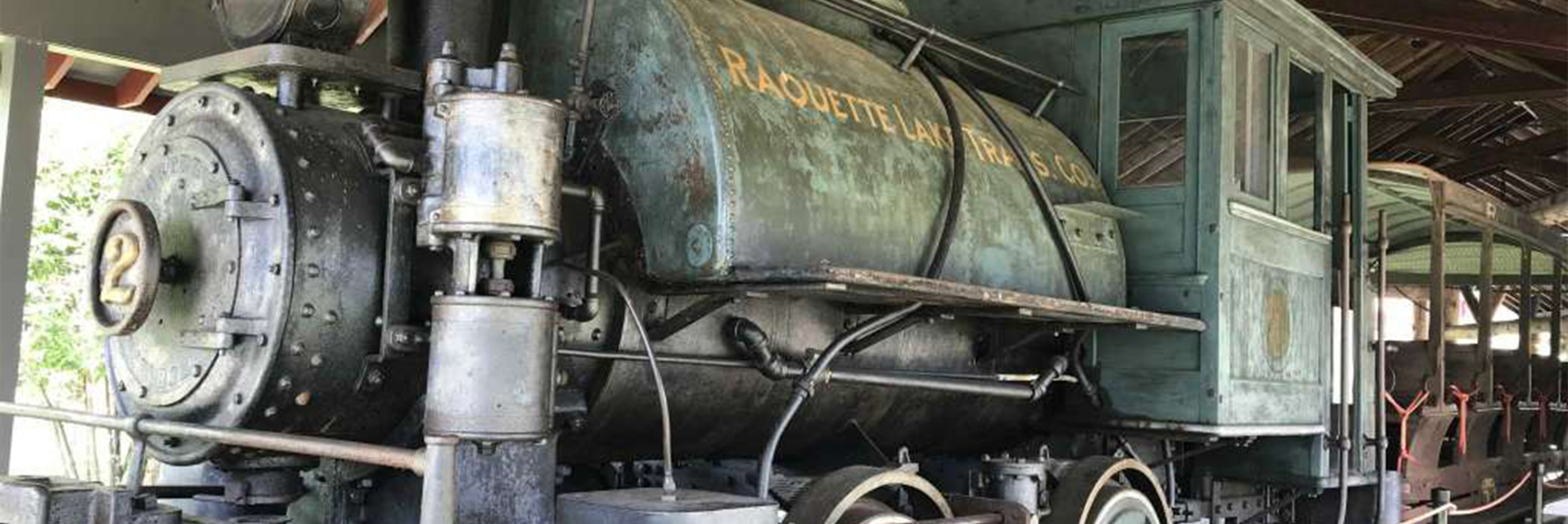
Durant’s railroad-steamboat network was still the principal means for getting to the region in 1904. Twelve-year-old Harold Hochschild was captivated by the train and the steamboats. Hoping for a chance to handle the steam-engine’s throttle, he cultivated a friendship with Rassie Scarritt, driver of the H.K Porter Engine on the Marion River Carry Railroad, the shortest standard-gauge line in the world. The engine towed two open passenger cars and a baggage car purchased from the Brooklyn Rapid Transit Co. in 1900. The total distance covered in the trip was 1300 yards.

Early on Harold began collecting information about the region. He amassed boxes of research materials, letters, Photostats, typescripts, and notebooks containing his penciled notes. His folders, ranging from “Adirondack Iron Works” to “Wild Animals,” are organized by subject in alphabetical order.

Harold’s research notes were the basis for an extensive history of the region. Serious work on the project did not begin until after World War II. Working nights and weekends, Harold researched his book, interviewing as many “old timers” as possible. When Township 34 appeared in 1952, it contained 614 quarto-sized pages, 470 illustrations, 39 maps, 24 appendices, a bibliography, index, and weighed seven pounds without its slipcover. 600 copies were printed.

The publication of Harold Hochschild’s book coincided with William Wessels’ idea of converting the Blue Mountain House, a summer resort high above Blue Mountain Lake, into a museum dedicated to Adirondack history.

The Adirondack Museum was a marriage between a wonderfully scenic site supplied by William Wessels, and the intellectual framework and financial support provided by Harold Hochschild. Many of the museum’s original exhibits were derived from Township 34. The Adirondack Museum opened to the public on August 4, 1957.

Nothing reflects the Adirondack region’s powerful hold on Harold Hochschild’s imagination as much as the museum’s Marion River Carry Pavilion. The pavilion contains the H.K. Porter Engine and passenger cars of Durant’s Marion River Carry Railroad. The train was brought to the museum in 1956, saved from decay in the woods where it had been abandoned.

The Marion River Carry Pavilion includes an automated diorama, known fondly as “the boat train,” that illustrates the history of the complicated, turn-of-the-last -century network of railroads and steamboats that connected the region to the outside world when Harold Hochschild was a boy.

Every year, thousands of museum visitors of all ages linger at the diorama, listening as the recorded “voice” of the display tells the story of the Marion River Carry Railroad – listening to history brought to life.

Adirondack Theaters

It is always special to see movies in the theater. Getting out of the house! Seeing your favorite actor on the big screen! Indulging in an array of yummy snacks!

There are some exceptional theaters in the Adirondacks. The Palace Theatre located in downtown Lake Placid, New York, lives up to its name with ornate hand-painted detailing in the foyer, lobby and main theater. When the theater opened in 1926, there were 926 seats divided between the orchestra and a spacious balcony.

The Palace Theatre is home to the only theater organ north of Albany, N.Y., one of the only original installations remaining in New York State. The organ, a 3/7 Robert Morton, was installed in 1926, and accompanied silent films. With the emergence of “talkies” the organ fell out of use. It was restored in 1999 and once again serves as the accompaniment for silent film festivals. ( www.theaterorgans.com ) In 1983 the Palace became a multi-plex; the balcony was closed off for a second screen and three years later split in half for a third screen. The main theater with organ remains intact. (Adirondack Life, Sept/Oct 1999)

At one-time movie theaters were a common feature of most small towns in America. Many were social and architectural anchors of a community; this was also true of Adirondack theaters. (Adirondack Life, Sept/Oct. 1999) Many small town theaters now find it more and more difficult to compete with big-box cinemas, and have closed. Adirondack theaters face the same plight, although some have still managed to keep their doors open.

The earliest Adirondack theaters were built for stage performances, and because of the isolation of the region, was constructed well after others on the eastern seaboard. The first theaters were built along the southern fringe of the Adirondacks and moved north from 1850 to 1915. The success of a theater was dependent on good transportation routes and population, both of which were slow to develop. (Adirondack Life, Nov/Dec 1992) Many theaters opened in the Adirondacks in the 1920s, some hosting live stage acts as well as silent films. The theaters served as centerpieces of their communities and entertained local residents as well as visitors to the region.

The movie theater business boomed in the 1920s and 30s, and the Adirondack region, which would seem far removed from “glitz,” played a role in the movie industry. In 1913, Caribou Bill, a marathon sled driver from Alaska who enjoyed brief popularity in film circles, set up a crude film studio on Edgewood Road in the village of Saranac Lake, N.Y. At the time movies about the Klondike gold rush were very popular. Bill created a simple set with a saloon and trading post front, designed to resemble an Alaskan town. The hardships of running a studio in Saranac Lake became evident, and it was moved to Plattsburg in 1917. (Adirondack Life, July/Aug 1994)

Saranac Lake, whose population had grown immensely in the 1920s because of cure cottages and a sanatorium for tuberculosis patients, became a vacation destination as well and hosted many well-known personalities of the time. A prominent figure in the theater world was among the seasonal residents. William Morris, the founder of the famous theatrical-booking agency that launched the careers of a number of stars, owned a camp on Lake Colby and often hosted some of the top performers of the day. (Adirondack Life, July/ Aug 1994)

Morris was also responsible for calling on a number of prominent stars to perform benefits for local causes. Some of the “talent” included Eddie Cantor, Western star Tom Mix, Sir Harry Lauder, Irish tenor Fiske O’Hara, and Bugs Baer. (Adirondack Life, July/Aug 1994)

Saranac Lake was home to not one, but two theaters. The Pontiac, featured “all-talking pictures” after a Vitaphone Movietone sound system was installed in 1929. The “tent theater,” founded by Ed Casey, hosted live performances and a company of actors during the summer.

Improved transportation and higher costs to show first-run films have contributed to the demise of local cinemas. The small year-round population of the region has made it more and more difficult for theaters to keep doors open all year, dependent on ticket and popcorn sales alone. Some chose to close their doors through the winter months, showing movies only in the summer months when tourists could fill seats. Others have closed forever, the buildings re-purposed for other uses. The former theater in Long Lake, N.Y. is now a hardware store.

The community of Indian Lake fought against the loss of the Lake Theater, which opened in 1938, and was privately owned until 2006. The theater was open seasonally in its final few years of operation and finally shut down. Residents of the community realized the huge impact that the closure of the theater would have on the town. They recognized the need for thriving community spaces in order to make the Adirondacks more livable and to bring about economic revitalization. In November 2007 the group started fundraising in the immediate area, soliciting support from residents in Indian Lake, Blue Mountain Lake, Long Lake, Raquette Lake, and Sabael, N.Y. In sixty days, over 500 people — visitors, seasonal and permanent residents — pledged $170,000. The theater was purchased in February of 2008. In order to operate, the theater has attained non-profit status and relies heavily on private donors, selling advertisements, and some grant funding. (Ben Strader, Board Chair of the Indian Lake Theater, indianlaketheater.org) In 1995 a community non-profit group also saved the Glove Theater built in 1914, now a major landmark in Gloversville, N.Y.

Other still-operating Adirondack theaters include the Strand Theater in Old Forge, built in the 1920s and the State Theater at Tupper Lake. Each entertains locals and tourists and sells an assortment of yummy snacks – just like their historic predecessors.

The Hudson River Whitewater Derby

Spring in the Adirondacks brings melting snow and rain, causing rivers to swell and rush through the mountains, providing perfect conditions for whitewater enthusiasts.

In 1958, the Johnsburg Fish and Game Club organized the First Annual Hudson River Whitewater Derby, which became a nationally known competition. It began as a one-day, eight-mile race with 44 competitors on a course that ran the Hudson River from North Creek to Riparius, New York. The following year it grew to a two-day event with the addition of the popular slalom courses.

Whitewater slalom competitions involve navigating a decked canoe or kayak through hanging gates, testing the boaters’ ability to steer through a “wild river full of natural obstacles safely.” (Adirondack Life, May/June 1979)

The Hudson River Whitewater Derby quickly grew in popularity; by 1960 there were 126 contestants and 15,000 spectators. Dr. Homer Dodge was the master of ceremonies and at 72 years old, the oldest participant that year. On the tenth anniversary of the derby, the event drew competitors from around the United States and as far away as Kenya. The most notable participant was U.S. Senator Robert Kennedy, who borrowed a boat and entered the competition.

The boat Robert Kennedy used is now in the Adirondack Museum’s collection. It is a 13’2″ fiberglass kayak, built by Bart Hauthaway for David Binger, who loaned it to Kennedy. The boat is unique because it is one of the earliest all-fiberglass kayaks. Prior to the mid-1960s builders found it difficult to join the hull of the boat to the deck, so they made them of cloth. Hauthaway was able to solve this problem and fasten a fiberglass deck to the hull with pop rivets.

Dr. Homer Dodge became a legend of the event; by 1974 at 86 years old, he had participated in fourteen consecutive derbies. He was known as “the dean of American canoeing” in the 1960s and 1970s. Dodge was born in Ogdensburg, N.Y. in 1887. Prior to the construction of the St. Lawrence Seaway, Dodge was the only person on record to have conquered the Long Sault Rapids in an open canoe. His boat was built by Grumman, the most popular aluminum canoe manufacturer of the time. (Boats and Boating in the Adirondacks, Hallie Bond)

The Whitewater Derby contributed to the development of new businesses surrounding the event. One entrepreneur was John Berry, an avid whitewater racer who started out during the early days of the sport in the mid-1950s. Berry was part of the first group to canoe the Grand Canyon and a three-time national champion in whitewater slalom. In the mid-1970s Berry purchased former stagecoach sheds at the terminus of the D. & H. Railroad at Riparius, where he built boats and started a whitewater school. (Adirondack Life, May/June 1979) The Adirondack Museum has Berry’s fiberglass Berrigan model C-2 whitewater racing canoe in its collection.

While the Hudson River Whitewater Derby is held in the spring when the river is usually at its highest and fastest, there are still rapids throughout the year. Whitewater rafting is a popular river sport that continues throughout the summer and fall. Water is released from the Indian River Dam at Indian Lake, N.Y. to ensure good rafting conditions later in the season or when the river level is low. A number of companies have developed in the immediate area to guide rafters down the river.

Adirondack Faces

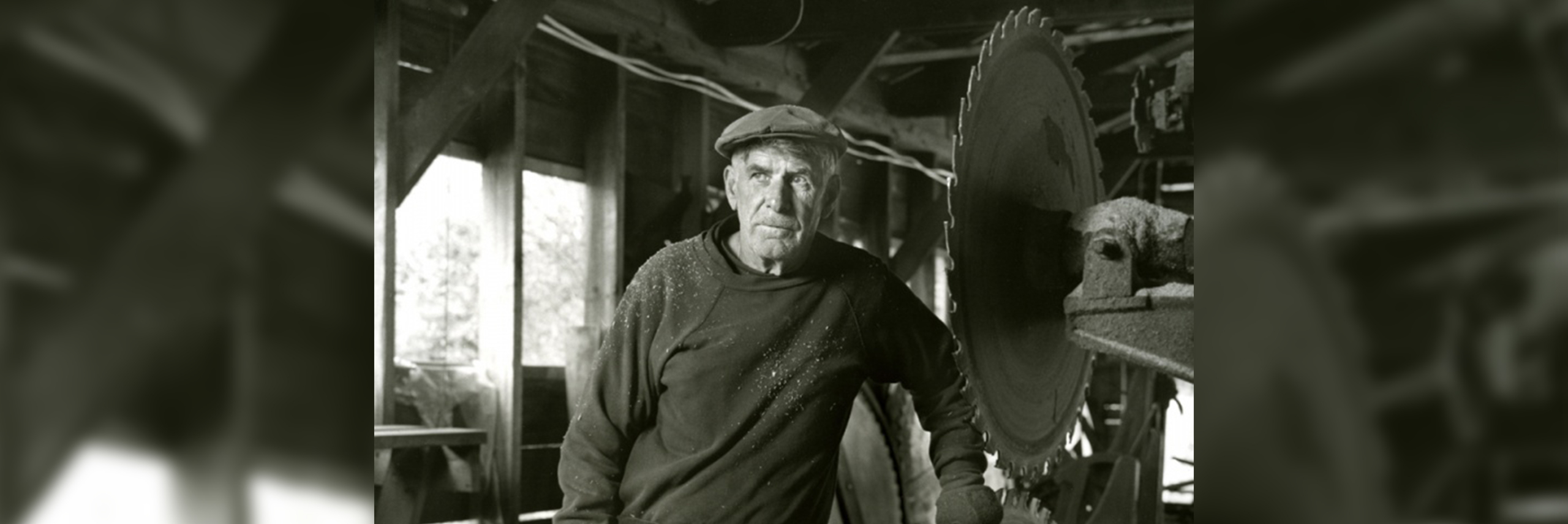
Photographer Mathias T. Oppersdorff had a knack for capturing the personality of his subjects. In the book Adirondack Faces, commissioned by the Adirondack Museum in 1986, Oppersdorff’s sensitive portraits demonstrate that the character of a place is reflected in the faces of its community.

In the book’s introduction, he wrote, “From the beginning, I wanted to place my subjects in their own surroundings. In this way, I could show a face and let the environment add to our insight as to how each person lived and worked. I met all my subjects on their own ground.”

Oppersdorff received international acclaim for his work throughout his career. Son of an Austrian count, he traveled extensively taking photographs for Gourmet Magazine, GEO Magazine, Natural History, Diversion, Nikon World, Popular Photography, and Conde Nast Traveler.

Mathias T. Oppersdorff died January 26, 2010, near his home in Rhode Island at the age of seventy-four. His legacy lives on through the work he contributed to our region’s historical record, both in the telling, beautiful portraits he captured and in the oral history interviews he conducted with his subjects, which are housed in the Museum’s library.

Header Image: Jim Latour, sawmill owner and former logger, Saranac Lake, New York, December 1986.

Fire Towers

Have you ever hiked an Adirondack mountain with a fire tower? Were you able to climb up to enjoy the view? Do you know about the important function the towers served in the region?

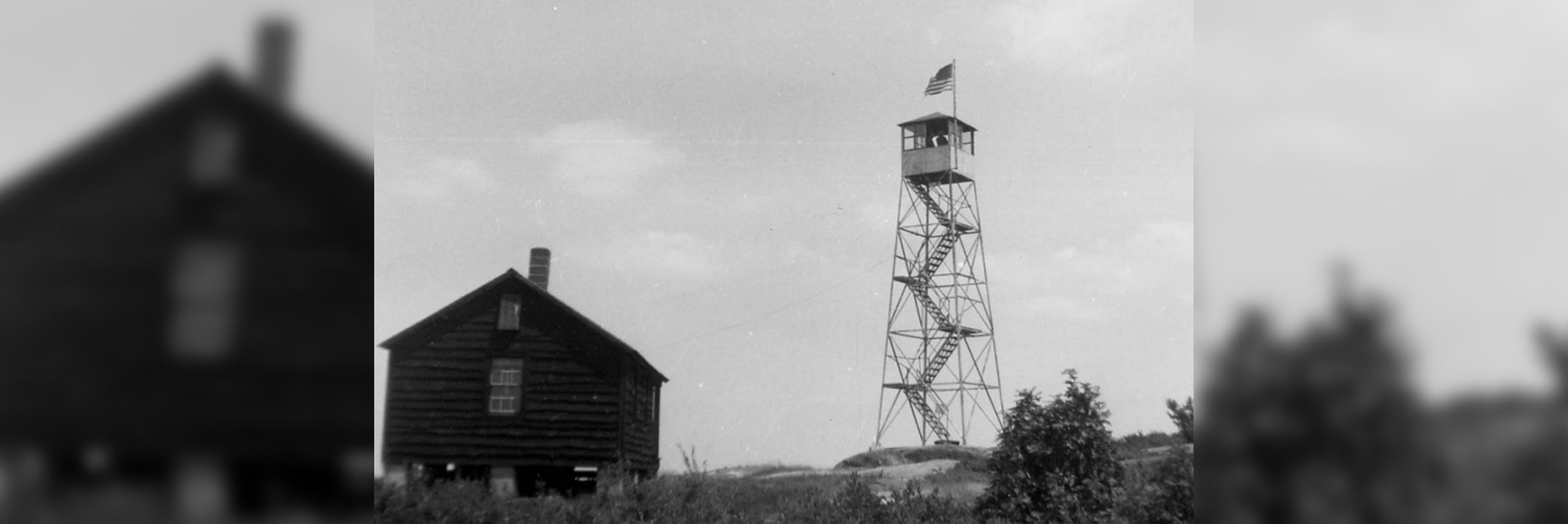
During the early 1900s, a number of forest fires wreaked havoc in the Adirondacks. As a result, the State of New York built lookouts at the top of mountains and hired observers for early fire detection. The observers would pinpoint the location of fires and communicate with ground crews to direct them to the source.

In time, the towers became popular hiking destinations. The observers working in them were a source of knowledge for visitors about fire protection and environmental awareness. By the early 1970s aircraft were increasingly used for fire detection; a single plane could survey a vast stretch of land. Fire towers were more expensive to man; each tower required someone on duty from April through October. Their use was slowly discontinued.

At one time there were fire towers at 124 locations in New York State, fifty-seven were located within the Adirondack Park. Now there are thirty-four fire towers remaining, twenty of which are on state land. (https://dec.ny.gov/things-to-do/hiking/fire-towers)

With time many of the structures have deteriorated. As the towers age and questions about land classification and compliance with the Adirondack Park’s State Land Master Plan arise, the debate over preservation versus removal has zealous supporters on each side. Those in favor of saving fire towers argue that the towers are significant reminders of the region’s history and heritage. Advocates for removal argue that only a Wilderness classification can protect these lands from future degradation, or the building of non-compliant structures.

The Adirondack Park Agency (APA) has proposed three methods to resolve the issue of the fire towers. The first is to reclassify a small area around the base of the fire tower as a Historic Area. The remaining land surrounding the fire towers can be classified as Wilderness. The second is to revise the State Land Master Plan to allow towers under certain conditions. The third would be “No Action;” the APA would not take steps to review revisions and towers could be removed as “non-conforming structures in Canoe and Primitive areas. (www.apa.state.ny.us)

Supporters argue that with repair the towers once again can serve as educational tools, teaching visitors about the history of fire prevention and ways to be environmentally aware in the future. An example of a way in which the towers are used educationally is the Adirondack Mountain Club’s Fire Tower Challenge. Hikers are asked to document their experience ascending at least 23 fire tower summits and submit proof of stewardship. They are also asked to think about what it might have been like for the observer that was once perched atop the fire tower. This challenges people to protect the environment, recognize the importance of fire towers, prioritize safety, and promote responsible recreation and stewardship.

Learn more from the Adirondack Mountain Club here: https://members.adk.org/members/get-involved/adk-fire-tower-challenge.aspx

Hunting in the Adirondacks

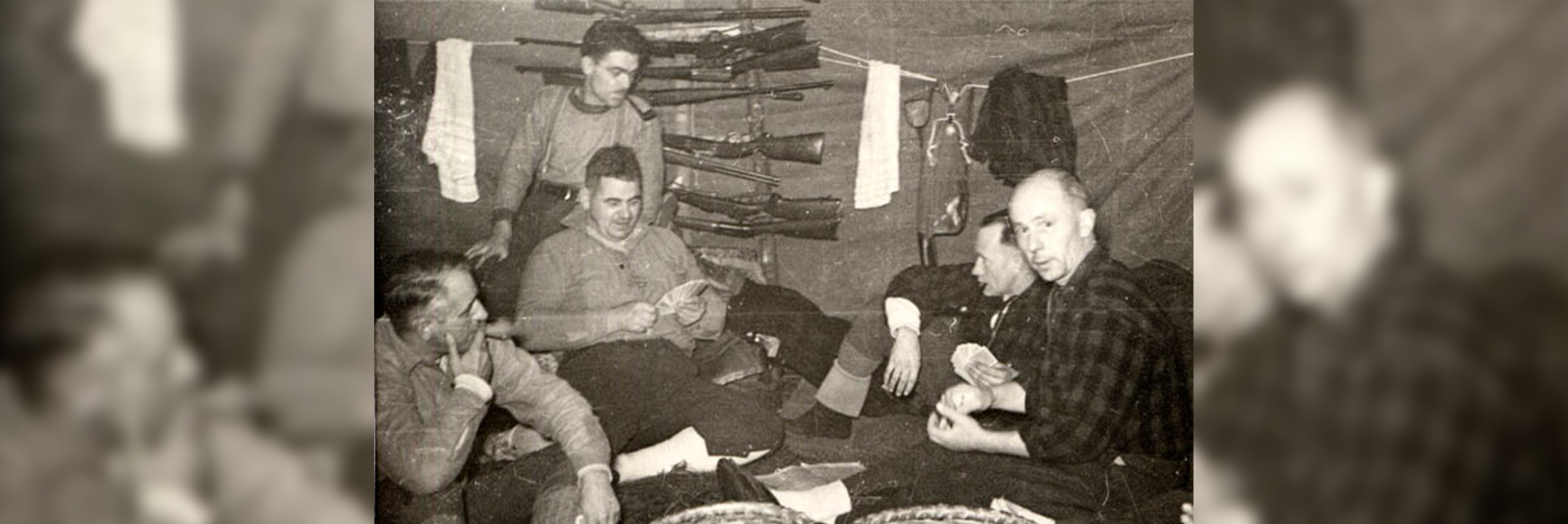
The Buck Lake Club Cabin is one of the Adirondack Museum’s largest artifacts. Once “deer camp” to the extended family of Mike and Hilda Virkler of Castorland, New York, the cabin as an exhibit shares the story of contemporary hunting and the traditions that surround “going into camp” with thousands of visitors each year.

The number of tourists in the Adirondack region drops off dramatically as summer turns to fall. However, hunters come to the area annually in search of game such as white tail deer and black bear. Some hunters are from “downstate” while others are out-of-staters drawn by the remote wilderness of the Adirondacks. Others are locals like the Virklers and enjoy the camaraderie and rituals of hunting with family and friends.

Hunting has long been a staple of the region. Adirondack residents were once dependent on game to feed their families, and many still rely on hunting as a way to supplement family meals.

The regulation of hunting began in 1885 with the formation of the Forest Preserve Advisory Board. Game laws were established and hunting licenses or “tags” required. The Advisory Board eventually became today’s Department of Environmental Conversation (DEC).

There are official hunting seasons in New York for a range of wild animals. From ducks, geese, turkeys, and upland birds to rabbits, deer, and black bear, hunters can pursue a variety of game in designated months of the year.

Hunting is big business. In prime hunting areas, motels, restaurants, taverns, gas stations, and sporting goods stores rely on an influx of income from hunters. Towns reap the benefits of licensing fees. According to a study of the impact of tourism on Hamilton County, N. Y. conducted by the Northern New York Travel & Tourism Research Center at SUNY Potsdam, visitors — including hunters — spent a total of $69 million dollars in 2006. A breakdown of expenditures by month shows that $6.14 million was spent between October and December, deer season in the Central Adirondack county, which is also home to the Adirondack Museum. (Northern New York Travel & Tourism Research Center)

While hunting remains popular in the Adirondacks and throughout New York state, nationally the number of hunters is on the decline. As family traditions change and more people grow up in cities where hunting and trapping seem old-fashioned or even frightening, many young people are no longer raised with the knowledge, skills, and experience that hunting requires.

Though the number of hunters is on the decline, over the past dozen years Adirondack hunters have taken animals in numbers comparable to those in the 1950s and 60s, when hunting was immensely popular. In 1954, 10,192 whitetail bucks were killed, a record that still stands. In 2000, 9,632 bucks were taken. According to the Adirondack Explorer the number of bucks killed in the past twelve years averaged 7,931 annually. (Adirondack Explorer, November/December 2010)

While contemporary views on hunting may be changing, the sport remains an important aspect of Adirondack history — past and present.

Bread in the Adirondacks

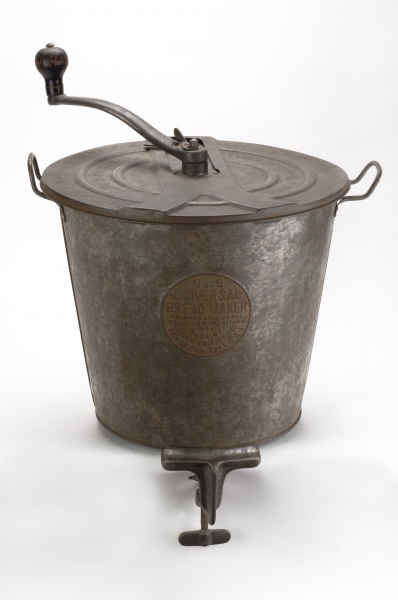
Bread is not unique to the Adirondacks, but the traditions surrounding this food have played an important role in Adirondack women’s lives for generations.

Bread tends to be hearty and was a staple food for men mining and logging in the Adirondacks. Many routines have developed around the production of both “quick” and yeasted breads. They played a key role in domestic life, and women in the Adirondacks developed new recipes to make better use of readily available items.

In today’s society, store-bought bread is taken for granted and most people do not think of the time and effort that went into its production. Historically, before the days of instant yeast and power mixers, Adirondack women had to schedule their day around this process. While not a necessarily difficult task, it involved forethought and planning; the dough needed to rise and be attended to.

Most bread requires a leavening (rising) agent such as yeast, however commercial yeast was first introduced in this country by Fleishman at the Philadelphia Exposition in 1876. Many women used either a salt rising method or a starter that required constant care, feeding it regularly and discarding the excess. Bread starters are still used today, mainly in artisan sourdough breads. They are a bubbly batter of flour and water that naturally gains yeast from the air.

Bread, doughnuts, buckwheat pancakes, rolls, and buns were all typical in an Adirondack diet. Adirondackers have been notoriously resourceful with the resources available to them. Adirondack guide Bill Nye relied on hearty buckwheat pancakes to feed his guests in the late 1800s. However, these were not the fluffy light pancakes that we think of today, instead they were described as “dog-chokers” because of the huge thick nature of the cakes.

“Venison and Wheat Cakes” was a popular Adirondack dish, demonstrating the reliance on local food. Deer are abundant in the Adirondacks and were a staple of the Adirondack winter diet. One recipe for wheat cakes proves how hearty Adirondack bread products could be; it called for cake yeast, water, a cup of buckwheat flour, and a half a cup of cornmeal and white flour. The dough rose overnight and was cooked the next morning on a hot griddle. (Wild Game Cook Book, compiled by Martin Rywell, 1952)

Historically, Adirondack meals depended on what was in season and locally available. Farming in the Adirondacks was a difficult endeavor, and crops such as wheat were not always successful. As a result, many Adirondackers developed recipes that relied less on store bought wheat and more on ingredients that could be successfully locally grown, like buckwheat and corn ground into meal that were more accessible.

Local, whole, and natural foods have resurged in our society and with this the art of bread making is a way people have sought to return to a more natural and healthy way of life. More and more artisan bakeries have started to pop up in the Adirondacks and nearby areas, returning to a tradition of hearty breads that were once a staple of local diets. Great bakeries can be found in many towns throughout the Park. From the Rock Hill Bakehouse & Café just outside the Adirondacks in Moreau, N.Y. that supplies bread to many restaurants and stores in the region, to the Crown Point Bread Company in Crown Point, N.Y. and Merrick’s Bread & Coffee in Wadhams, N.Y. that uses organic flour from the mill in Westport N.Y., fresh local bread is once again becoming a staple in the Adirondack diet. This is only a small sampling of bakeries in the region. There are many wonderful bakeries from Old Forge to Keene and Saranac Lake to North Creek, N.Y.

Not only are great homemade baked goods being made in the area, the Champlain Valley is also home to a flour mill that processes organic wheat from three farms, two of which are in Essex County, N.Y.

The following is a bread recipe submitted by Mrs. Granvel R. Hack to a regional newspaper in the 1890s:

“A Good Bread Receipt”

1
First mix a luke warm quart, my daughter,
One half scalded milk, one half water;
To this please add two cakes of yeast,
Or the liquid kind if preferred in the least.
2
Next stir in a teaspoonful of nice clear salt,
If this bread is not good, it will not be our fault,
Now add the sugar, teaspoons three;
Mix well together, for dissolved they must be.
3
Pour the whole mixture into an earthen bowl,
A pan is just as good if it has no hole,
It’s the cook and the flour, not the bowl or the pan;
That, MAKES THE BREAD THAT MAKES THE MAN.
4
Now let the mixture stand a minute or two,
You have other things of great importance to do,
First sift the flour, use the finest in the land;
Three quarts is the measure, Gold Medal the brand.
5
Some people like a little shortening power.
If this is your choice just add to the flour,
Two tablespoonfuls of lard and jumble it about;
Till the flour and lard are mixed without a doubt.
6
Next stir the flour into the mixture thats stood,
Waiting to play its part, to make the bread good.
Mix it up thoroughly, but not too thick;
Some flour makes bread that’s more like a brick.
7
Now grease well a bowl and put the dough in,
Don’t fill the bowl full, that would be a sin;
For the dough is all right and its going to rise,
Till you will declare that its twice the old size.
8
Brush the dough with melted butter, as the recipes say;
Cover with a bread towel, set in a warm place to stay.
Two hours or more, to rise until light,
When you see it grow, you will know its all right.
9
As soon as its light place again on the board;
Knead it well this time, here is knowledge to hoard.
Now back in the bowl once more it must go,
And set again to rise for an hour or so.
10
Form the dough gently into loaves when light,
And place it in bread pans, greased just right.
Shape each loaf you make to half fill the pan,
This bread will be good enough for any young man.
11
Next let it rise to the level of pans, no more,
Have the temperature right do not set near a door.
Be very careful about draughts it is not made to freeze,
Keep the room good and warm, say seventy-two degrees.
12
Now put in the oven, its ready to bake,
Keep uniform fire, great results are at stake.
One hour more of waiting and you will be repaid,
By bread that is worthy A WELL BRED MAID.

Adirondack Spring Water

The Adirondack Mountains have long been treasured for the healing properties of clean air, beautiful scenery, and sparkling water. The air and scenery could only be experienced in the Park itself, but water could be bottled and shipped elsewhere and became a major export from the region during the 19th century.

Urban-dwelling New Yorkers in the late 1800s suffered from the effects of overcrowding, poor ventilation, summer heat, and the stresses of working a nine-to-five job. New ills like “dyspepsia” and “neuralgia” could be alleviated with a healthful escape to the Adirondack Mountains, where fresh air, exercise, and pure water would restore the weakest constitution to vigorous health.

For those who could not afford the time or cost of summer in the mountains, bottled water from Adirondack springs was a more affordable alternative. Bottled water, some imported from overseas, was served in fine restaurants in New York City. Bottled from mineral springs, it often contained slight amounts of sodium bicarbonate, which could soothe an unsettled stomach. Bottled water was valued not only as an aid to digestion but also for other perceived medical benefits.

In the early 1860s, the St. Regis Spring in Massena, New York, produced water advertised as a “curative for all affections [sic] of the Skin, Liver and Kidneys.” Harvey I. Cutting of Potsdam bottled and sold “Adirondack Ozonia Water,” the “world’s most hygienic water” from a spring “in the wildest portion of the Adirondack wilderness, far from the contaminations of human habitation” near Kildare in St. Lawrence County.

Cutting’s advertising included testimonials from satisfied customers. G.W. Schnell, a wholesale grocer in Indianapolis, Indiana, wrote in 1905, “I have used your Adirondack Ozonia Water for several months and find it to be the best water I have ever had. It acts on the kidneys and bowels in such a way as not to be annoying.” With typical Victorian hyperbole, the company touted the water’s “most excellent medicinal qualities,” claiming it cured hay fever, “congestion of the brain and prostate gland,” breast cancer, rheumatism, inflammation of the bladder, Bright’s disease, and “stomach troubles.”

By 1903, the Malone Farmer reported “an average of 1,500 gallons of Adirondack water is shipped from Lowville to Watertown each week. The water is sold in that city in three-gallon cases at 15 cents per case.” In 1911, the Ogdensburg Advance and St. Lawrence Weekly Democrat ran a story in the Farm and Garden column advocating “Water as a Crop,” as “a great many cities are complaining of the inferior quality of the water furnished by city waterworks.” Water wagons, bearing loads of spring water, were a common sight in many cities, and a “profitable trade in bottled water could be worked up at a little cost to the farmer, provided, of course, they have never-failing springs of pure water from which to supply the demand.”

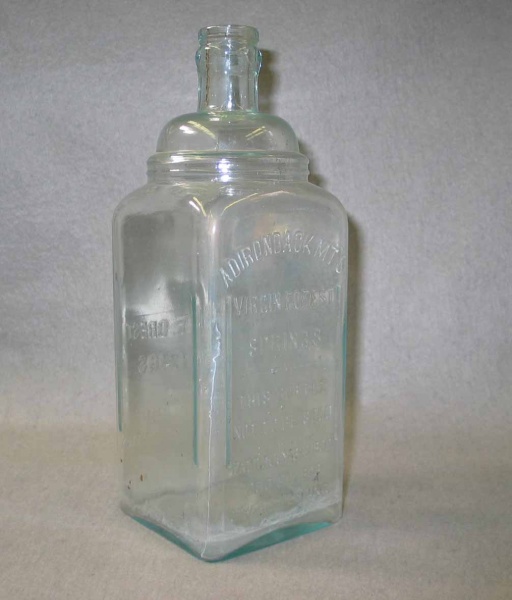
  1. Augustus Low (1843-1912), was a prolific inventor, entrepreneur, and owner of the Horse Shoe Forestry Company in northern Hamilton County, near the center of the Adirondack Park. Low-produced lumber, maple syrup, wine, and jams and jellies. In the 1880s, his company began exporting bottled water from the “Adirondack Mt’s Virgin Forest Springs.” In 1905, Low designed and patented a glass water bottle with heavy ribs near the neck that strengthened it, reducing breakage while in transit. The ribbing also made the bottles easier to grasp.

In 1908, Low’s Adirondack empire collapsed when a series of devastating forest fires burned through his Adirondack properties. The Adirondack Museum owns several objects relating to the Horse Shoe Forestry Company’s products, including one of Low’s spring water bottles and the patent he received for its design.